
What Is a 10 kWp Photovoltaic System – and Why Is It Relevant in 2026?

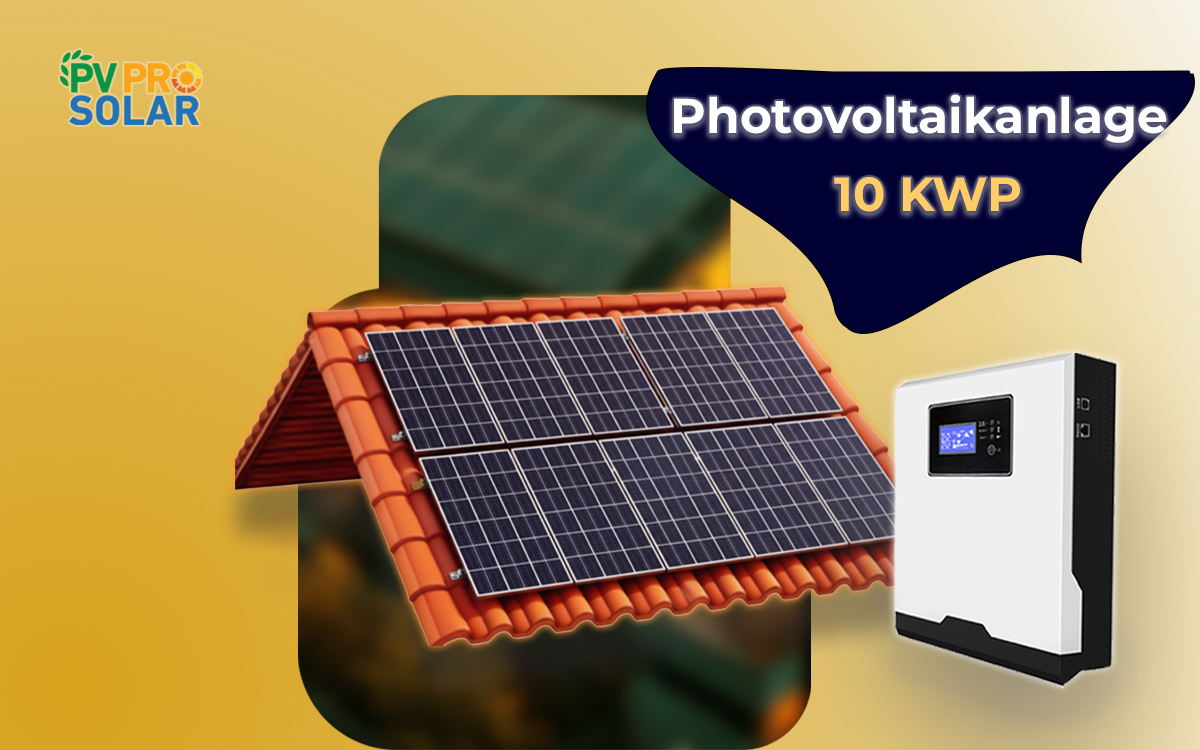
A 10 kWp photovoltaic (PV) system is considered the ideal combination of high energy production, reasonable investment cost, and optimal self-consumption in 2026. An increasing number of homeowners and small businesses are opting for this system size because it enables strong electricity generation without exceeding the 10 kWp threshold—a limit that in Germany often comes with tax advantages.
What Does the Output of a 10 kWp PV System Mean?
The output of a PV system rated in kilowatt peak (kWp) refers to its maximum electrical power under standard test conditions. This means a 10 kWp system can deliver up to 10 kilowatts of electrical power under ideal sunlight. The kWp value is a technical reference point used to compare potential yields.
How Important Is the kWp Rating for Actual Annual Production?
The kWp value represents the system’s peak capacity, not the amount of energy it generates annually. Factors like location, roof orientation, and system technology have a greater impact on actual output. Still, the basic rule holds: the higher the kWp, the more electricity can be produced.
What Factors Influence the Annual Power Generation?
- Regional solar radiation
- Roof pitch (ideally 30–35°)
- Orientation toward the sun (South is best; East/West also viable)
- Temperature (extreme heat can reduce efficiency)
- Shading from trees, dormers, or neighboring buildings
Why is a 10 kWp System Especially Popular in 2026?
The growing demand is driven by three key market trends:
What Market Trends Are Driving Interest in 2026?
- Higher module efficiency, requiring less roof space
- Falling hardware prices, making systems more affordable
- Smart home integration, enabling better self-consumption and automation
What Role Do Rising Energy Prices and the Push for Energy Independence Play?
Households want supply security and cost control. Solar power significantly reduces electricity bills over time and increases independence from utility companies.
Who Should Consider a 10 kWp PV System in 2026?
This system size is suitable for both residential and small commercial users.
Is a 10 kWp System Ideal for Single-Family Homes?
Yes—especially if the household uses between 4,500 and 7,500 kWh of electricity annually.
How Much Roof Space Is Needed?
The area required depends on the type of solar module:
| Module Type | Power per Module | Area Required |
| High-efficiency monocrystalline | ~420–450 Wp | approx. 20–24 m² per kWp |
| Total for 10 kWp | — | approx. 50–70 m² |
So, a typical 10 kWp PV system requires about 60 m² of roof space.
What Is the Best Roof Orientation?
- South-facing: Highest annual yield
- East/West: More electricity in mornings/evenings → better self-consumption rates
Is a 10 kWp System Suitable for Businesses?
Yes—small businesses benefit greatly, especially those with high daytime consumption.
Which Sectors Benefit Most?
- Workshops and craft businesses
- Retail stores
- Hospitality (restaurants & hotels)
- Offices
When Does a 10 kWp System Make Economic Sense for Businesses?
When annual power consumption is between 8,000 and 20,000 kWh.
How Important Is Location for a 10 kWp PV System?
While Germany overall offers good solar conditions, regional differences still matter.
How Do Yields Differ by Region?
- Northern Germany: ~9,000–10,500 kWh/year
- Southern Germany: ~10,500–12,000 kWh/year
What Weather Conditions Influence Performance?
- Clear, sunny days
- Low fog frequency
- Minimal shading
How Much Energy Can a 10 kWp System Produce in 2026?
Average Annual Output in Germany:
10,000 to 12,500 kWh per year
How Do Sunlight and Seasons Affect Output?
- Summer: Up to 65% of the total yearly production
- Winter: Lower output; short-term fluctuations are normal
How Does Temperature Impact Performance?
Extreme heat can reduce module efficiency—but modern panels are optimized for high temperatures.
How Much Self-Consumption Is Possible with a 10 kWp System?
- Without storage: 30–45%
- With battery storage: 60–85%
How Do Batteries and Smart Home Tech Enhance Self-Consumption?
A 10 kWp system with a storage solution (e.g. BYD system) intelligently manages energy use, significantly increasing the self-sufficiency rate.
Tips to Maximize Self-Consumption:
- Charge EVs during daylight hours
- Connect heat pumps to the PV system
- Use smart plugs to time washing machines, dishwashers, etc.
What Are the Main Components of a 10 kWp PV System?
What Solar Modules Are Best in 2026?
Monocrystalline modules continue to dominate the market.
Differences Between Module Types:
- Monocrystalline: Highest efficiency
- Polycrystalline: More affordable, but less common
- Glass-glass: Superior durability
Most Efficient Modules in 2026:
- N-Type, TOPCon, or HJT modules
- Efficiency: 21–23%
What Type of Inverter Is Recommended?
Hybrid inverters are becoming standard, allowing seamless battery integration.
Difference Between Hybrid and Standard Inverters:
- Built-in battery port
- High efficiency (>97%)
- Smart energy management features
- Example: KOSTAL hybrid inverters for 10 kWp systems
Why Inverter Efficiency Matters:
A 1% increase in inverter efficiency = up to 120 kWh more per year.
How Important Is Battery Storage for a 10 kWp System?
Very important—especially for those prioritizing energy independence and high self-consumption.
Recommended Storage Size:
8–12 kWh for single-family homes
How Much Autonomy Can Storage Provide?
Increases independence from ~45% to up to 80%.
Mounting Systems: Rooftop vs Ground Installation
Differences Between Mounting Systems:
- On-roof systems: Standard and cost-effective
- In-roof systems: Visually appealing, but more expensive
Why the Mounting System Matters:
Using corrosion-resistant materials ensures long system life.
What Are the Costs of a 10 kWp System in 2026?
Cost Breakdown:
| Component | Estimated Cost (2026) |
| Modules | €6,000–€8,000 |
| Inverter | €1,500–€3,000 |
| Battery storage | €7,000–€11,000 |
| Full system without storage | €13,000–€16,000 |
| System with storage | €20,000–€26,000 |
Cost Trends in 2026:
Due to economies of scale, prices are expected to remain stable and competitive.
What Are the Installation Costs?
They vary by installer and region. Factors that can increase costs:
- Need for roof renovation
- Complex wiring
- Flat-roof mounting requirements
What Ongoing Costs Should Be Expected?
Typical Maintenance Tasks:
- Annual visual inspection
- Inverter check every 10–15 years
Lifespan of Components:
- Modules: 30–40 years
- Battery storage: 12–18 years
When Will the System Pay for Itself?
How to Calculate Payback Time:
System Cost ÷ Annual Savings = Payback Period
Impact of Self-Consumption:
Higher self-use → faster return on investment
How Do Incentives Help?
Tax exemptions and regional subsidies can significantly shorten the payback period.
How Much Can Be Saved Annually?
Between €1,400 and €2,000 per year
What Affects Annual Savings?
- Local electricity prices
- Household energy use
- Level of energy independence
Role of Electricity Prices in 2026:
The higher the grid electricity cost, the more attractive solar power becomes.
Incentives and Legal Framework in 2026
Available Subsidies:
- Low-interest loans (e.g. KfW programs)
- Regional battery storage grants
Tax Benefits for Households:
- 0% VAT may still apply → up to 19% cost reduction
Support for Businesses:
- Investment deductions
- Accelerated depreciation
Legal & Tax Considerations:
What’s the Impact of the 0% VAT Policy?
- Lower purchase costs
- Simplified paperwork
Are Income Taxes Applicable?
For systems up to 10 kWp, feed-in profits are often tax-free.
Installation Process of a 10 kWp PV System
Key Steps:
- On-site analysis
- Technical system design
- Mounting the system
- Grid connection
- Notification to the grid operator
Timeline:
Typically 2–6 weeks from planning to completion
Post-Installation Inspections:
- Electrical safety tests
- Commissioning protocol
What’s Required for Grid Connection?
Necessary Documents:
- Meter registration
- Site plan
- Technical data sheet of the system
Who Handles the Grid Registration?
A certified electrician usually manages all paperwork.
How to Optimize a 10 kWp System in 2026?
Role of Optimizers & Smart Controllers:
- Module optimizers improve yield under shading
- Smart systems enable load shifting and detailed usage insights
Importance of Regular Maintenance:
- Inspect solar cables and connectors
- Clean modules every 1–3 years, depending on the environment
Pros and Cons of a 10 kWp PV System
Advantages:
- High power output
- Excellent self-consumption potential
- Strong autonomy
- Long system life
- Reduces carbon emissions
Potential Drawbacks:
- Shading or limited roof space can reduce yield
- Long-term risks: e.g. battery or inverter failure
Ready to Take the Next Step?
A 10 kWp photovoltaic system in 2026 offers the ideal balance of performance, cost-efficiency, and long-term reliability. If you’re looking to lower your electricity bills, gain energy independence, and invest sustainably, this system class is an excellent choice.
Explore your options with a local expert:
PVPro Solar GmbH – Your Partner for Turnkey Solar Solutions in Germany.
Get a free consultation now: PVPro Solar GmbH.
50–70 m² on average.
30–40 years; batteries typically last 12–18 years.
Not mandatory—but highly recommended for better self-consumption.
Low—around €150–250 per year.
Between 10,000 and 12,500 kWh annually.
Usually 1–2 days for the actual mounting.
Significantly higher in summer.
Tax benefits and regional grants.
Up to 5–6 tons of CO₂ annually.
South is best—East/West also works well. How much roof space does a 10 kWp system need?
What’s the lifespan of PV modules?
Do all 10 kWp systems need a battery?
How much are maintenance costs?
What yields can be expected?
How long does installation take?
How does production vary between summer and winter?
What incentives exist for systems up to 10 kWp?
How much CO₂ does a 10 kWp system save per year?
What roof orientation is ideal?