
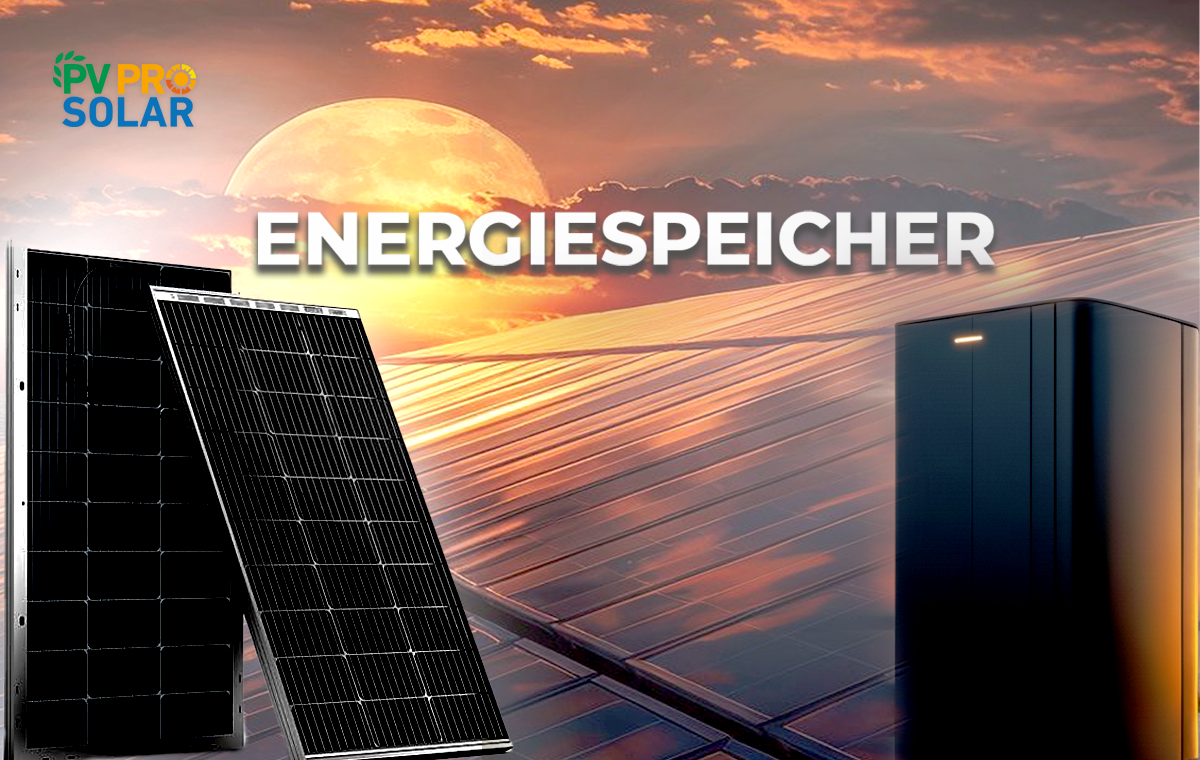
Home Energy Storage: How Modern Batteries Make Your Solar System More Independent

An energy storage system is now a key component of a future-ready energy supply at home. More and more households are choosing not only to generate their own solar power but also to store it. With a home battery system, solar energy can be used even when the sun isn’t shining—whether in the evening, at night, or on rainy days. This significantly increases independence from the energy market and offers long-term protection against rising electricity prices.
The importance of energy storage continues to grow, especially as the expansion of renewable energy accelerates. To ensure that sustainably generated electricity is available whenever it’s needed, powerful storage technologies are essential. In this space, battery storage plays a crucial role and is considered one of the most important energy storage technologies of our time.
Why Is a Home Battery Worth It?
Many solar systems without storage feed excess electricity directly into the grid. However, feed-in tariffs have been steadily declining, while consumer electricity prices are rising. A home battery flips this equation in your favor:
- Higher self-consumption instead of feeding into the grid
- Greater independence from the public power supply
- Protection against energy price fluctuations
- Access to solar power around the clock
- Improved comfort and energy self-sufficiency
On average, households with a solar system and battery use 60–80% of their solar power themselves. Without storage, this number drops to just 25–35%.
What Battery Size Makes Sense? 5 kWh, 10 kWh, or More?
For a typical single-family home, a 10 kWh battery system has proven to be the optimal size. Smaller 5 kWh batteries are well-suited for small households or balcony solar systems. Larger batteries—10 kWh or more—are ideal for families that use a heat pump or electric vehicle.
Key factors in sizing your home energy storage system:
- Number of household members
- Daily energy consumption
- Output of the solar system
- Planned expansions (e.g. EV charging)
A properly sized battery ensures that you draw as little power as possible from the grid.
Lithium-Ion Batteries – The Preferred Technology
Today, lithium-ion batteries dominate the home storage market. They offer:
- Long lifespan of 10 to 20 years
- High efficiency of 90–97%
- Compact design
- Fast charging and discharging cycles
- Low maintenance
Manufacturers such as BYD and Sonnen offer advanced safety features and modular systems that allow you to expand storage capacity as your energy needs grow.
Costs: How Much Does a Solar System with 10 kW Storage Cost?
The total cost of a solar system with battery storage depends on several factors—primarily the storage capacity, brand, efficiency, and the overall size of the PV system. Installation services and the energy management system also play a significant role.
In general, the higher the storage capacity (e.g., 5 kWh or 10 kWh), the larger the overall investment. Complete systems with integrated battery storage vary widely depending on the manufacturer, component quality, and the individual requirements of the household.
For an accurate cost assessment, it is recommended to request a custom solar-plus-storage offer or conduct a professional cost comparison through certified installers. This ensures you choose the ideal combination of PV modules, inverter, and battery storage that perfectly matches your energy consumption.
Is a Battery System Right for Every Home?
Pairing solar panels with a battery is especially cost-effective when:
- Little electricity is used during the day (e.g., for working households)
- Self-consumption is a priority
- Heat pumps or electric vehicles are in use
- Long-term energy independence is the goal
In northern Germany—for example, in Hannover and Bremen—interest in battery-backed solar systems is growing steadily, as people seek both energy security and cost control.
Incentives & Subsidies – Battery Storage Support in Germany
To promote climate-friendly energy, many local and regional governments offer financial support for home battery systems. This can include:
- Upfront investment grants
- Low-interest loans
- Tax benefits (e.g. VAT exemption on solar + storage systems)
Since available programs change frequently, expert advice is essential to ensure you don’t miss out on potential savings.
Retrofitting Storage: AC Batteries or Full System?
Many owners of older solar systems are now looking to add battery storage. There are two common approaches:
- AC batteries (AC-coupled systems):
- Compatible with existing inverters
- Easily integrated into current systems
- Complete solar + storage systems from the start:
- Perfectly matched components
- Higher total efficiency
If you’re considering the switch, look into a solar + storage package to save time, hassle, and costs.
Energy Storage for Balcony Solar Systems – Does It Make Sense?
Compact storage units for mini solar setups are gaining popularity. A battery for a balcony power system can be useful if:
- You use more power in the evenings
- Feed-in tariffs are low
- You want to maximize your solar power usage
While storage capacity is usually small (0.5–2 kWh), it’s a great fit for single-person households.
The Future of Home Energy Storage – Where Are We Headed?
Technology is evolving rapidly. Key trends include:
- Using electric cars as home batteries (Vehicle-to-Home / V2H)
- More powerful batteries for solar systems
- Hydrogen-based storage innovations
- Smarter energy management software
Soon, homes with solar + battery will function as miniature, intelligent power plants. The energy future is decentralized, flexible, and renewable — and modern energy storage is at its core.
When Is the Best Time to Invest?
In short: Now.
- Battery prices have dropped significantly
- Incentive programs are highly attractive
- Energy prices remain high
- Self-consumption delivers immediate financial benefits
By investing in a solar + storage system today, you gain:
- Long-term financial security
- Greater energy independence
- A sustainable, climate-friendly energy supply
Energy Storage: The Key to Unlocking Solar Power’s Full Potential
An energy storage system turns solar power into true self-sufficiency. Whether you’re buying an AC battery, upgrading your existing solar panels, or opting for a full solar + storage setup — the goal is the same: more independence and lower energy bills.
With professional planning and installation, you’ll achieve maximum efficiency and get the most out of your solar investment.
PVPro Solar GmbH – Your Expert Partner for Solar + Storage in Hannover
Get a free quote today. Let’s shape your personal energy transition — secure, smart, and sustainable.
10–20 years, depending on technology, usage patterns, and charging cycles.
Yes. It significantly boosts self-consumption and reduces reliance on the grid.
Yes. AC battery systems can be easily integrated with most existing setups.
It depends on household size and usage. For most single-family homes, 5–10 kWh is typical.
Grants and tax benefits vary by region — check current programs for your location.
It stores excess solar energy and releases it automatically when you need it. How long does a home battery last?
Is solar with a battery worth it?
Can I retrofit a battery to my existing solar system?
What size battery do I need?
What subsidies are available?
How does a battery system work?