
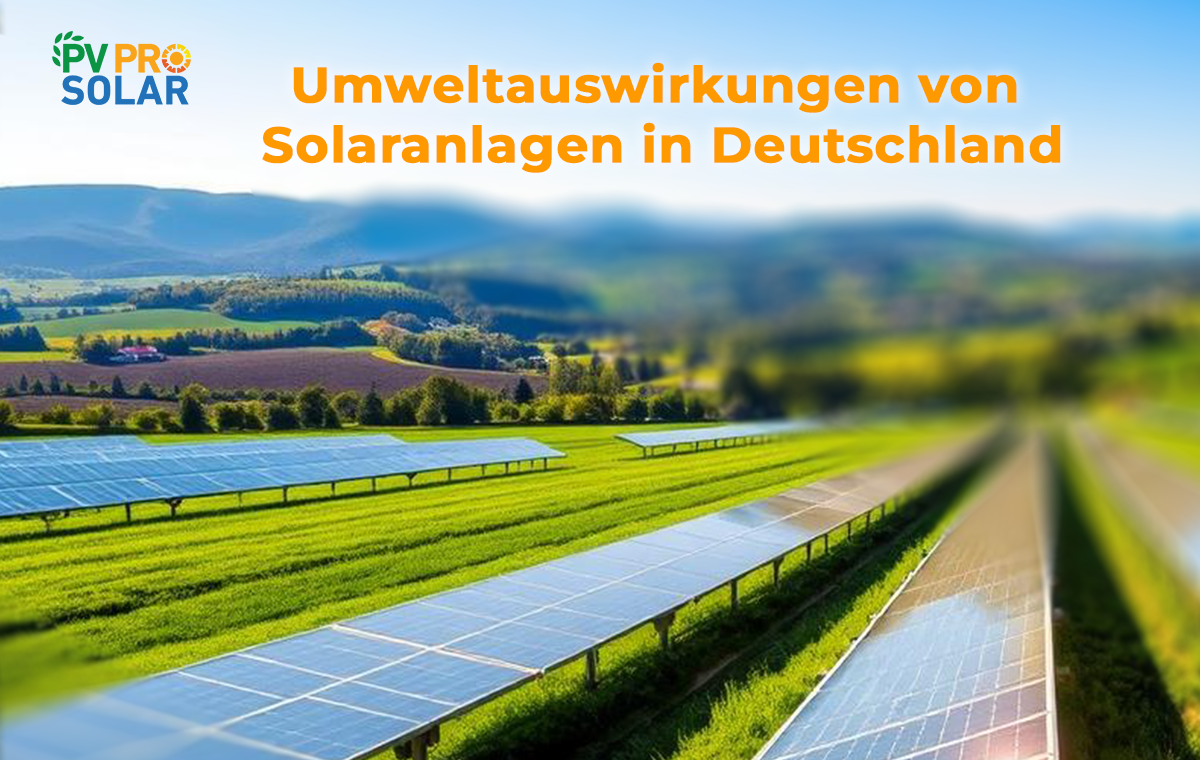
Environmental Impact of Solar Panels in Germany: Opportunities, Risks, and Sustainability

The environmental impact of solar panels in Germany goes far beyond just CO₂ emissions. From manufacturing and operation to end-of-life recycling, factors such as energy use, land consumption, and biodiversity play a critical role. This article explores the positive and negative environmental effects of solar panels—and how Germany is working to make photovoltaic systems more sustainable to support a greener energy transition.
What Does “Environmental Impact of Solar Panels in Germany” Mean?
The term environmental impact of solar panels in Germany refers to all ecological consequences associated with the manufacturing, operation, maintenance, and disposal of photovoltaic (PV) systems. This includes far more than just greenhouse gas emissions—resource consumption, recyclability, land usage, and biodiversity impacts are also key considerations.
Germany is among the leading European countries in solar energy adoption. Photovoltaic systems currently supply over 14% of the nation’s electricity, significantly easing the burden on the climate. Still, every technology—even solar power—comes with environmental challenges. The key questions are:
- What is the actual environmental footprint of solar modules?
- Do the benefits outweigh the downsides?
- And what measures can reduce the negative effects in the long term?
Key Environmental Factors in Germany
- Energy consumption and CO₂ emissions during panel production
- Land use and effects on soil and landscapes
- Impacts on wildlife and plant life
- Recycling and recovery of raw materials
- Lifecycle assessment and overall ecological balance
What Is the CO₂ Balance of Solar Panels in Germany?
The carbon footprint is the most commonly referenced environmental metric when assessing solar panels. While manufacturing solar modules requires energy—especially in silicon purification—these emissions are offset relatively quickly by the clean electricity the panels generate.
Production and Energy Input
Producing solar cells, particularly during silicon purification, is energy-intensive. Nevertheless, the average CO₂ emission per kilowatt-hour (kWh) of electricity generated is only about 50–60 grams of CO₂-equivalent. Modern manufacturing plants are continuously lowering this figure by adopting more efficient processes and renewable energy.
Operation and Emission Savings
Once installed, PV systems emit no direct CO₂ during operation. Every kilowatt-hour of solar electricity displaces fossil-fuel-based power, saving around 690 grams of CO₂ on average. Over a lifespan of 25 years, a typical rooftop system can prevent over 30 metric tons of CO₂ emissions.
Energy Payback Time
The energy payback time—when a solar panel has generated as much energy as was used in its production—is just 1 to 2 years in Germany. After that, the system delivers pure surplus clean energy.
How Does Land Use for Solar Panels Affect the Environment?
One of the primary concerns regarding the environmental impact of solar panels in Germany is land consumption. However, the actual effect depends heavily on where the systems are installed.
Rooftop and Parking Structure Installations
Roughly 80% of all solar systems in Germany are mounted on existing structures such as rooftops, parking garages, or industrial buildings. These installations do not require additional land and make use of already sealed surfaces.
Ground-Mounted Installations and Solar Parks
Large-scale installations on meadows or farmland require more space but can offer advantages. Many are built on conversion sites—former landfills, mining areas, or unused commercial land—helping to revitalize degraded areas.
Agri-PV as a Dual-Use Solution
Agri-photovoltaics (Agri-PV) combine solar power generation with agriculture, allowing shared use of land for crops and energy. This significantly reduces land-use competition and can even improve soil moisture and crop yields during hot summers.
Sustainable Land Use Strategies
- Prioritize already sealed or barren land
- Vegetate the ground beneath the modules
- Maintain distance from ecologically sensitive areas
- Involve local communities to increase acceptance
With thoughtful planning, solar installations need not harm the landscape—they can even enhance it.
How Do Solar Panels Affect Biodiversity, Flora, and Fauna?
The relationship between solar power systems and biodiversity is complex. Poorly planned projects can disrupt ecosystems, but well-designed solar parks can create new habitats and support wildlife.
Negative Impacts
Open-area systems can disturb local ecosystems through shading, construction activity, and soil compaction. Some animals avoid open module fields, and plant growth may change beneath the panels.
Positive Outcomes
When designed with nature in mind, solar parks can serve as refuges for endangered species. Vegetated areas under panels and wildflower strips along the edges support pollinators, birds, and small mammals. Studies have shown that biodiversity in solar parks can increase over time.
Best Practices in Action
- Integrating flowering meadows beneath panels
- Using native plant species
- Installing wildlife corridors
- Partnering with conservation groups
Ultimately, the ecological impact depends on planning and maintenance. Sustainably developed solar projects can make a meaningful contribution to species protection.
What Role Does Recycling Play in the Environmental Impact of Solar Panels?
As PV systems reach the end of their lifespan, recycling solar modules becomes increasingly important. Germany already has clear regulations to ensure a closed-loop materials cycle.
Materials and Resource Recovery
Solar panels are primarily made of glass, aluminum, silicon, plastics, and small amounts of metals. Up to 95% of these materials are technically recyclable.
Recycling Processes
Specialized facilities separate glass, aluminum, and silicon, and advanced technologies recover silver, copper, and tin. This process reduces the demand for raw materials and lowers the energy used in producing new panels.
Environmental Benefits
- Significant reduction in resource consumption
- Less waste generation
- Lower CO₂ footprint for new solar modules
Improving recycling infrastructure is key to minimizing the long-term environmental impact of solar energy.
What Are the Risks and Limitations of Solar Panel Use?
Despite numerous advantages, solar energy also comes with certain ecological and technical challenges.
Degradation and Lifespan
Solar panels gradually lose efficiency—about 0.5% per year. After 25 years, most still operate at over 85% capacity. Proper end-of-life disposal is essential to reduce environmental harm.
Soiling and Maintenance
Dust, leaves, or pollen can reduce panel output. Regular cleaning enhances performance and extends system longevity.
Safety Concerns
Poor installation or faulty wiring can increase fire risk. Professional installation and routine inspections are therefore essential.
Climate Exposure
Panels must endure extreme temperatures, snow, and storms. Fortunately, modern PV systems are designed to be highly durable and weather-resistant.
What Measures Can Minimize the Environmental Impact of Solar Panels?
To make solar power as eco-friendly as possible, Germany employs a variety of strategies:
Climate-Friendly Manufacturing
- Use of renewable energy in panel production
- Reduction of energy-intensive processes
Optimized Land Use
- Priority for rooftops and industrial zones
- Limiting ground-mounted systems in sensitive areas
Biodiversity Promotion
- Establishing wildflower meadows
- Creating habitats for insects and birds
Recycling and Circular Economy
- Expanding take-back and recycling infrastructure
- Supporting closed-loop material use
Technological Innovation
- Adoption of thin-film modules and sustainable materials
- Integration with smart grid storage solutions
These efforts position solar power as one of the most sustainable energy sources available today.
Environmental Impact of Solar Panels in Germany
The environmental impact of solar panels in Germany presents a largely positive picture: while challenges exist, the benefits clearly outweigh the drawbacks. Through sustainable manufacturing, recycling, smart land use, and ecologically mindful system design, solar energy is becoming increasingly green.
Investing in solar not only supports climate protection but also helps conserve natural resources. With modern technology and responsible planning, environmental impact can be minimized—paving the way for a truly sustainable energy future in Germany.
Visit PVPro Solar to learn more about sustainable solar solutions and start shaping your own eco-friendly energy future.
Get a free consultation today and benefit from a cleaner tomorrow!
Yes. While their production requires energy, solar panels generate far more clean electricity over their lifetime than they consume during manufacturing.
Only when poorly planned. Well-designed systems can actually support biodiversity through flowering areas and protected habitats.
In Germany, the energy payback time is 1 to 2 years. After that, the panel operates with net-zero emissions.
They are recycled. Up to 95% of the materials can be recovered, significantly reducing environmental impact.
Yes. Thanks to advanced technology, photovoltaic systems perform well even in low-light conditions, making them suitable across the country. Are solar panels truly environmentally friendly?
Can solar panels harm wildlife?
How long until a solar panel pays back its energy use?
What happens to old solar panels?
Can solar panels be used in all parts of Germany?