
Which Solar Panels in 2026 Truly Deliver the Highest Returns?

The market for the best solar panels in 2026 has become significantly more demanding. It is no longer enough to look at wattage alone. When selecting the best solar panels in 2026, consider factors such as efficiency, temperature coefficient, degradation rate, warranty terms, and the panels’ compatibility with the inverter and battery storage system. This is where it becomes clear whether investing in the best solar panels in 2026 will ultimately pay off.
Homeowners in Lower Saxony, Hanover, Bremen, or Wolfsburg are asking the same question: Which solar panels in 2026 are truly future-proof? Rising electricity prices and new subsidy frameworks are reshaping expectations for modern photovoltaic systems.
Anyone who takes a closer look at the topic quickly realizes that choosing the right solar panels directly affects energy yield, self-consumption rates, and even the future resale value of the property.
Why Do Solar Panels Play a Bigger Role Today Than Just a Few Years Ago?
Demand for high-performance solar panels continues to grow because photovoltaic systems are no longer simply a subsidy-driven decision. Today, the focus is on energy independence, grid integration, storage compatibility, and charging infrastructure.
Planning an optimal PV system means selecting the right panel for the specific roof. Not every roof surface is equally suited to every type of module. Orientation, shading, and roof pitch all determine which solar panels make real sense in practice.
A common mistake: consumers focus on the price per panel. However, the best photovoltaic modules are not automatically the cheapest. What truly matters is the cost per kilowatt-hour generated over 25 to 30 years.
What Technical Features Define the Best Solar Panels in 2026?
When evaluating top-performing solar panels, measurable performance indicators are key:
1. Efficiency
Leading models now achieve efficiencies exceeding 22%. High-quality PV modules rely on N-type, TOPCon, or HJT technologies.
2. Temperature Coefficient
Especially during hot summers, the temperature coefficient determines whether your PV system continues to perform reliably.
3. Low Degradation
The best solar panels lose less than 0.4% of output per year.
4. Product and Performance Warranties
Major manufacturers now offer performance warranties of 25 to 30 years.
When these parameters are met, one can genuinely speak of top-tier solar panels—not merely in marketing terms, but in practical application.
Which PV Module Models Will Dominate the Market in 2026?
In 2026, certain PV module designs are becoming particularly prominent, especially those featuring bifacial cell technology and glass-glass construction. This design enhances both durability and energy yield.
Highly sought-after brands include:
- LONGi Green Energy
- JinkoSolar
- Trina Solar
- REC Group
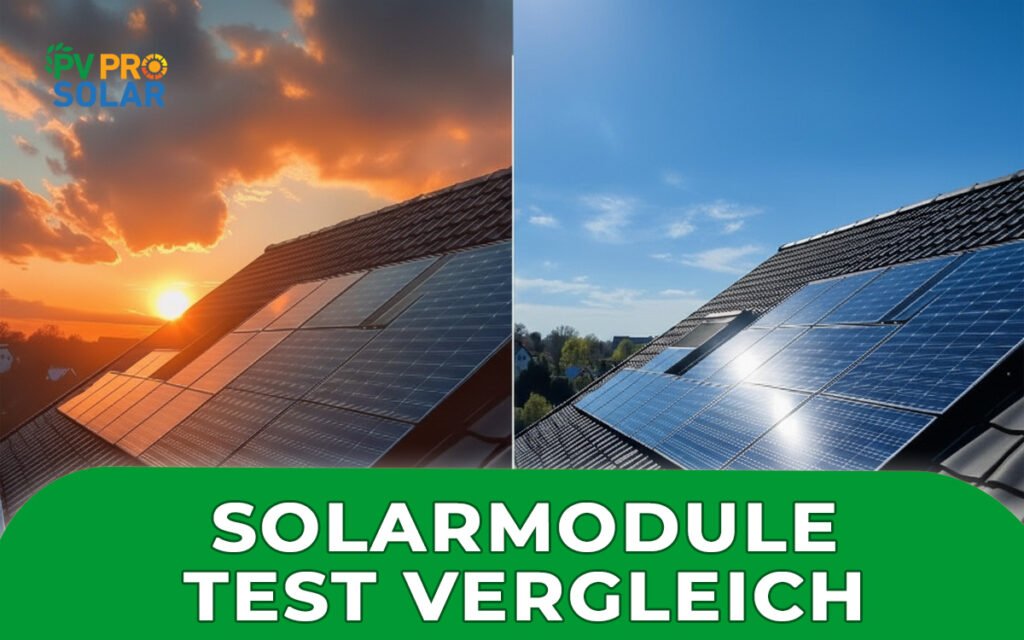
These companies consistently appear in major solar panel tests conducted by leading certification bodies. However, an important distinction must be made: large-scale solar panel tests evaluate performance under laboratory conditions. What ultimately matters is real-world performance on your own roof.
For this reason, PVPro Solar GmbH analyzes each project individually to identify the most suitable solar panels for the specific property.
What Does a Major Solar Panel Test Actually Show?
Comprehensive solar panel tests typically assess:
- Performance under Standard Test Conditions (STC)
- Behavior under partial shading
- Resistance to moisture
- PID resistance
- Mechanical durability
However, even the most comprehensive test cannot replace a project-specific evaluation. The right module choice depends on roof type, structural factors, and electricity consumption patterns.
Many consumers search online for the “best photovoltaic modules” based on rankings. Yet such rankings often overlook regional differences, particularly in areas like Lower Saxony or Bremen.
Selecting the best solar panels in 2026 is therefore not about choosing a single “test winner,” but about ensuring optimal system integration within a well-designed PV installation.
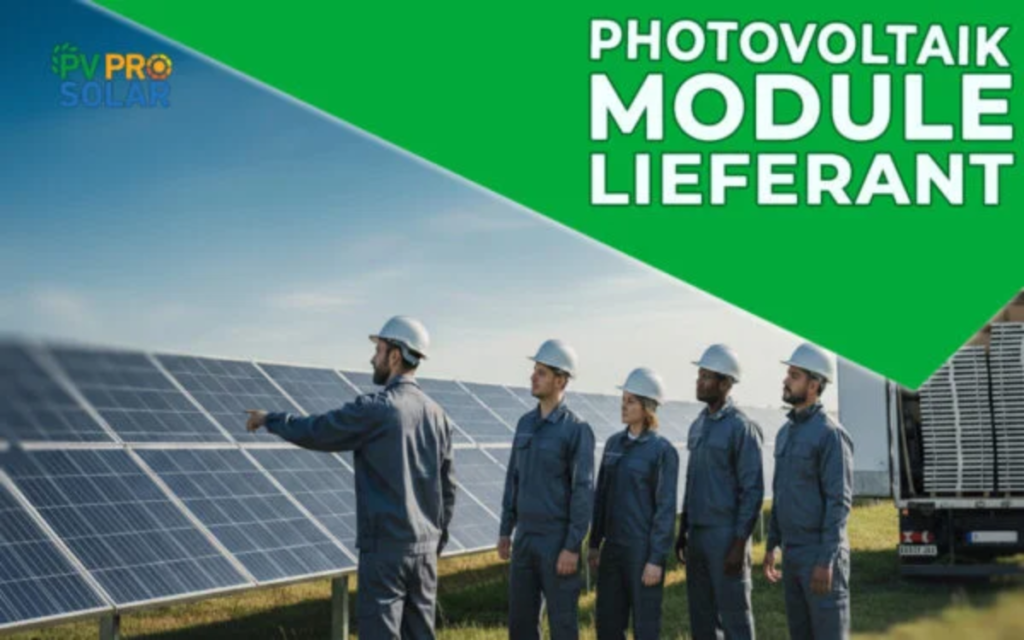
What Role Do Major Manufacturers Play in Selecting the Best Solar Panels?
Large manufacturers invest billions in research and development. This results in:
- More stable supply chains
- Stronger warranty backing
- Higher certification standards
Still, size alone does not guarantee top-tier quality. Some smaller premium manufacturers offer technologically outstanding PV modules.
That is why PVPro Solar GmbH looks beyond brand recognition and focuses on verified performance data when recommending solar panels.
How Do the Best Solar Panels for Single-Family Homes Differ from Commercial Systems?
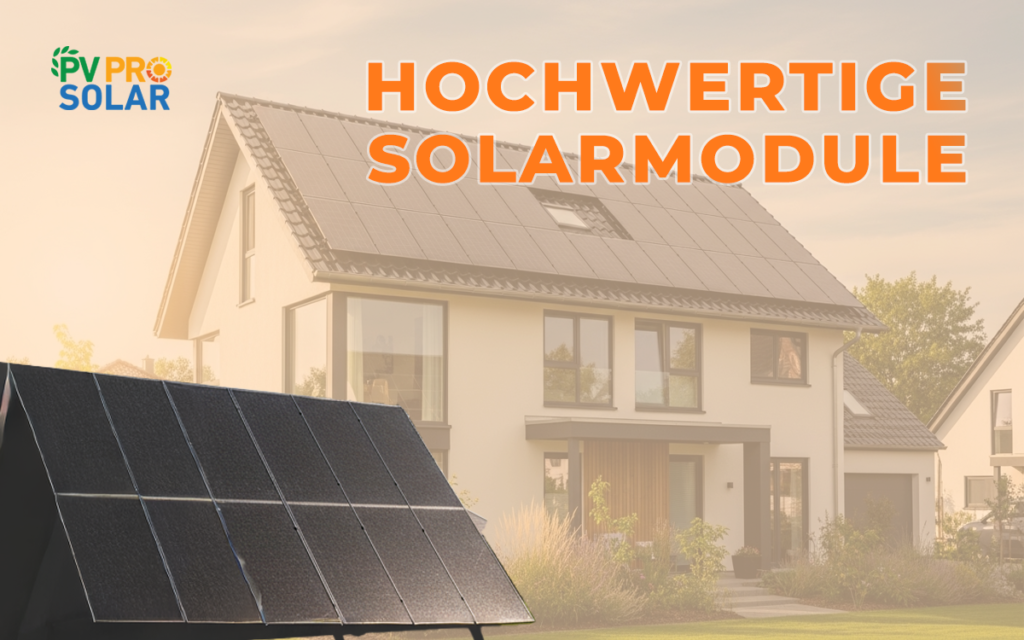
For private households, key factors include:
- High efficiency per square meter
- All-black design (Full Black)
- Storage compatibility
For commercial installations:
- High module output per unit
- Economies of scale
- High system voltage
These differences highlight how solar panel selection varies between residential and industrial projects.
An optimal PV system always considers the consumption profile, the roof structure, and the grid connection requirements.
How Do Battery Storage and Wallboxes Influence Panel Selection?
With the rapid growth of electric mobility, demand for high-performance solutions is increasing. Operating a Wallbox requires stable and predictable energy yields. Therefore, the best solar panels in 2026 should:
- Deliver strong low-light performance
- Integrate seamlessly with hybrid inverters
- Allow fast and flexible system control
Only then can a PV system truly maximize self-consumption.
Which Modules Are Best Suited for Northern Germany?
Regions such as Hanover or Bremen often experience diffuse light conditions. In such areas, PV modules with excellent low-light performance are essential.
The most suitable photovoltaic modules for northern Germany typically combine:
- N-type cells
- Low degradation rates
- Glass-glass construction
These characteristics often make a decisive difference in panel selection.
What Does a System with Premium Solar Panels Cost?
High-quality systems are generally priced slightly above standard modules. However, long-term returns are significantly higher.
For example:
- Standard module: 18–20% efficiency
- Premium module: over 22% efficiency
Over 25 years, premium panels can generate thousands of additional kilowatt-hours, significantly reducing the Levelized Cost of Energy (LCOE).
How Can You Distinguish Marketing Claims from Genuine Quality?
Not every 440 W module qualifies as a top-tier product. Some manufacturers optimize laboratory performance values.
True indicators of quality include:
- Transparent warranty terms
- International certifications
- Proven bankability
- Strong results in independent solar panel tests
This is where real quality separates itself from mere marketing.
Why Is Proper Module Selection More Important Than Nominal Output?
Choosing the right module affects:
- Inverter sizing
- String design
- Fire protection
- Grid stability
Even the best solar panels deliver benefits only when properly integrated into a well-engineered PV system.
What Trends Define Solar Panels in 2026?
Key technological trends include:
- Glass-glass construction
- 210 mm wafers
- TOPCon and HJT technologies
- Bifacial modules
The best photovoltaic modules combine several of these innovations, resulting in higher surface efficiency and lower aging rates.
How Can You Protect Your Investment Long Term?
Long-term security depends on:
- Working with financially stable manufacturers
- Professional installation
- Expert system planning
A properly designed PV system accounts for roof statics, snow load zones, lightning protection, and grid connection requirements.
This is what distinguishes a standard installation from a professionally executed project.
Why Should You Not Choose Solar Panels Alone?
Online comparisons provide general guidance. However, only a detailed project assessment ensures the right solution for your specific needs in 2026.
PVPro Solar GmbH evaluates:
- Roof area
- Consumption data
- Plans (electric vehicle, heat pump)
- Available subsidies
This results in a tailored PV system rather than a one-size-fits-all solution.
Which Solar Panels Are Right for Your Project?
Choosing the right solar panels in 2026 determines yield, profitability, and energy security. It is not about rankings or advertising claims, but about technical precision and integrated system planning.
If you would like to find out which solar panels best suit your roof in Hanover, Bremen, or Wolfsburg, visit PVPro Solar GmbH for a personalized consultation.
Request a non-binding roof analysis today and start planning the optimal PV system for your home.
Which solar panels are currently best for single-family homes?
The best residential solar panels are characterized by high efficiency, low degradation, and long warranties. N-type glass-glass modules regularly achieve strong results in independent solar panel tests.
How do I find the right module solution for my property?
The right module choice depends on roof size, shading, electricity consumption, and future planning. A technical assessment by a specialized provider ensures you receive the most suitable solar panel solution for 2026.