
Photovoltaic System VAT Invoice: What Property Owners in Germany Really Need to Know?

For many homeowners, the tax side of a solar installation remains a blind spot. Anyone who feeds electricity into the grid is deemed to be providing a commercial service under German tax law. That means issuing a proper VAT invoice for a photovoltaic system is not a formality but a legal obligation. German photovoltaic tax law has changed significantly in recent years, particularly with the introduction of the zero VAT rate and updated small business regulations. Despite these simplifications, many operators still make basic mistakes that can become costly during a tax audit.
Here is what you need to know, from correct invoicing and input tax deduction to registering with the tax office.
PVPro Solar GmbH
In 3 Schritten zur PV-Anfrage
Bedarf klären · Daten senden · Angebot erhalten
Jetzt Anfrage sendenBedarf klären
Schritt 1
Daten senden
Schritt 2
Angebot erhalten
Schritt 3
What does the zero VAT rate mean for photovoltaic system invoices?
Since January 1, 2023, a zero VAT rate applies to the supply and installation of photovoltaic systems up to 30 kWp on residential buildings. In practice, this means the installer issues an invoice with 0 percent VAT, and the buyer no longer pays any additional tax. The invoice shows a tax rate of 0 percent, but no tax amount is charged.
This zero rate covers modules, inverters, battery storage systems, and installation. Additional services that are not directly related to the system may be excluded. It is important that the installer clearly states the applicable tax rate and references Section 12 paragraph 3 of the German VAT Act. If this reference is missing, the invoice may be challenged during an audit, which can lead to unnecessary complications.
Small business scheme or standard taxation: which option suits photovoltaic operators?
Anyone feeding electricity into the grid must make an early and important decision: opt for the small business scheme or standard taxation. For many private individuals with smaller systems, the small business scheme is the simpler choice. If annual revenue from feed in remains below the legal threshold, there is no obligation to charge or remit VAT. This eliminates administrative effort and monthly advance VAT returns.
The downside is that input VAT cannot be reclaimed. Those who choose standard taxation, however, can recover the VAT included in purchase invoices. For larger systems with high upfront costs, this advantage often outweighs the additional administrative burden. In that case, a complete and correct VAT invoice must be issued for each feed in transaction.
What does a correct photovoltaic invoice look like?
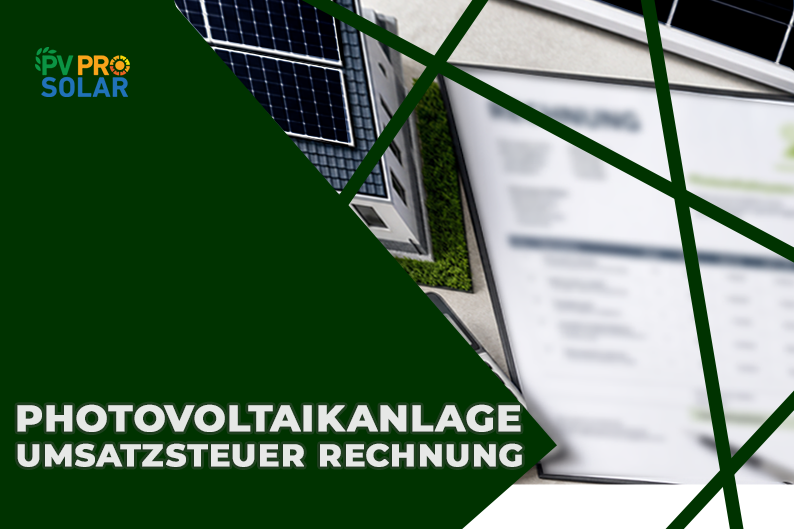
A compliant photovoltaic VAT invoice, whether issued by the installer or by the operator for electricity feed in, must include mandatory information in accordance with Section 14 of the German VAT Act. A proper invoice should contain at least:
- Names and addresses of the issuer and recipient
- Tax number or VAT identification number of the issuer
- Invoice date and a unique sequential invoice number
- Description of the service provided, for example supply and installation of a 12 kWp system
- Net amount, applied tax rate such as 0 percent, and tax amount
- Total gross amount
If any of these details are missing, the invoice is considered invalid for tax purposes, and the tax office may deny input VAT deduction. Many grid operators issue self billing statements for feed in, which are legally accepted as invoices if both parties agree to the arrangement. In all cases, invoicing must be complete, transparent, and audit proof.
How does input VAT deduction work for a photovoltaic system?
Input VAT deduction is a key argument in favor of standard taxation. Operators who register their system as a business activity with the tax office can reclaim the VAT included in purchase invoices. This applies not only to acquisition costs but also to maintenance, repairs, and ongoing operating expenses.
To claim input VAT, you must register as an entrepreneur with the tax office, submit regular advance VAT returns, and file an annual VAT return. Reclaiming input VAT is particularly beneficial for systems with high investment volumes, as the refunds can be substantial. Careful documentation of every invoice ensures you are well prepared in the event of an audit.
What should you consider when registering with the tax office?
Many operators underestimate the importance of registering their photovoltaic system with the tax office, which can lead to costly consequences. Anyone who commissions a system and feeds electricity into the grid is considered to be carrying out a commercial activity. The tax office must be informed using the questionnaire for tax registration, which can be submitted online via ELSTER. During this process, you also decide whether to opt for the small business scheme.
Registration should be completed promptly after commissioning, ideally within one month. Delays may result in back payments and interest charges. At this stage, you also determine how VAT will be handled and whether you need to issue invoices for each feed in transaction. German photovoltaic tax law requires clear and complete information.
How is feed in remuneration treated for VAT purposes?
Feed in remuneration often causes confusion. Anyone who supplies electricity and receives payment is providing a taxable service, provided they are not using the small business scheme. The grid operator pays the remuneration plus VAT, which the operator must remit to the tax office. This VAT must be clearly and correctly stated in the invoicing.
In many cases, the reverse charge mechanism applies, meaning the grid operator remits the tax directly. This reduces the administrative burden for the system operator. Nevertheless, an annual VAT return remains mandatory. If you are unsure when preparing your first invoice, consulting a tax advisor early is advisable, as errors can be difficult to correct later.
What applies to commercial use of photovoltaic systems?
For businesses, different rules apply compared to private individuals. Commercial operators can generally deduct the full VAT on acquisition costs as input VAT, provided the system is classified as a business asset. In addition, the system is capitalized and depreciated over its useful life.
In cases of mixed use, meaning partly private and partly commercial, input VAT is allocated proportionally. This requires especially careful documentation of every invoice. Incorrect accounting can quickly lead to additional tax liabilities. For businesses, accurate and compliant invoicing is therefore even more critical.
VAT for private individuals in 2026: what is changing?
VAT rules for private photovoltaic operators have become significantly simpler in recent years, and this trend continues into 2026. The increased threshold for the small business scheme means that most private system operators automatically fall outside VAT obligations. This results in no need to issue VAT invoices for feed in, no advance returns, and reduced bureaucracy.
However, registration with the tax office is still required when a new system is commissioned, even if the small business scheme is later chosen. The annual VAT return should also not be neglected. German photovoltaic tax law remains dynamic, and staying informed helps avoid costly surprises. While the small business scheme offers real relief, it does not replace proper registration and compliance.
Your next step: start your solar project without tax complications
The rules surrounding photovoltaic VAT invoices can be complex, but with the right partner, you do not have to navigate them alone. PVPro Solar GmbH supports homeowners and businesses across Lower Saxony, Hanover, Bremen, and Wolfsburg from initial consultation through commissioning and beyond.
Request your free quote from PVPro Solar GmbH today and ensure your solar system is set up efficiently and in full compliance with tax regulations.
Do I need to issue a VAT invoice as a private individual for feed in?
Only if you are registered under standard taxation. Those using the small business scheme do not issue VAT invoices.
What is the difference between a zero VAT rate and a tax exemption?
A zero VAT rate means VAT is applied at 0 percent. The transaction remains taxable but without a tax burden. A tax exemption removes the transaction entirely from the VAT system.
How much time do I have to register with the tax office?
Registration should be completed promptly after commissioning, ideally within one month.
Can I claim input VAT retroactively?
Yes, under certain conditions and within legal deadlines. A tax advisor can help recover missed input VAT.
Does the zero VAT rate also apply to battery storage?
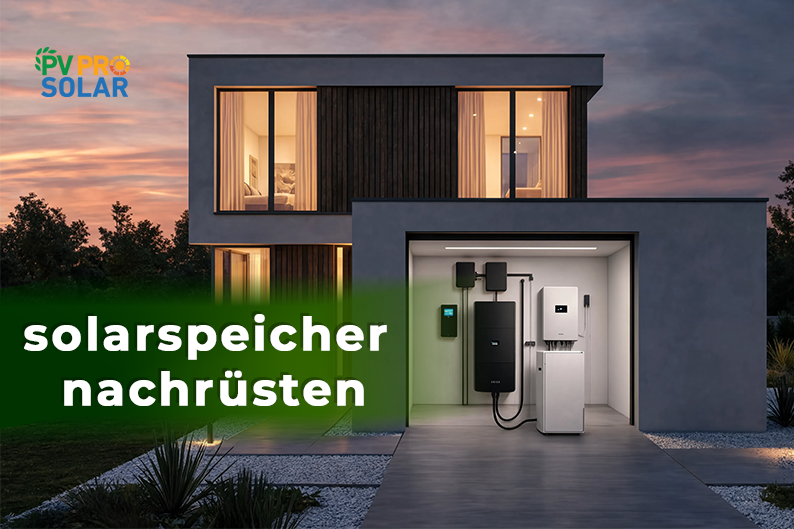
Yes, if the storage system is installed together with the photovoltaic system or retrofitted and the overall system meets the requirements.
What happens if I do not submit a VAT return?
The tax office may estimate your tax liability, impose late filing penalties, and, in repeated cases, enforce fines.
Do I need to issue a separate invoice for each feed in transaction as a business?
Not necessarily. Many grid operators issue self billing statements that count as invoices. However, all invoicing must be fully documented.
PVPro Solar GmbH
In 3 Schritten zur PV-Anfrage
Bedarf klären · Daten senden · Angebot erhalten
Jetzt Anfrage sendenBedarf klären
Schritt 1
Daten senden
Schritt 2
Angebot erhalten
Schritt 3