
Photovoltaic Lightning Protection: When It Is Necessary and What It Costs (2026)
Diese Seite ist auch auf Deutsch verfügbar
Artikel auf Deutsch lesen
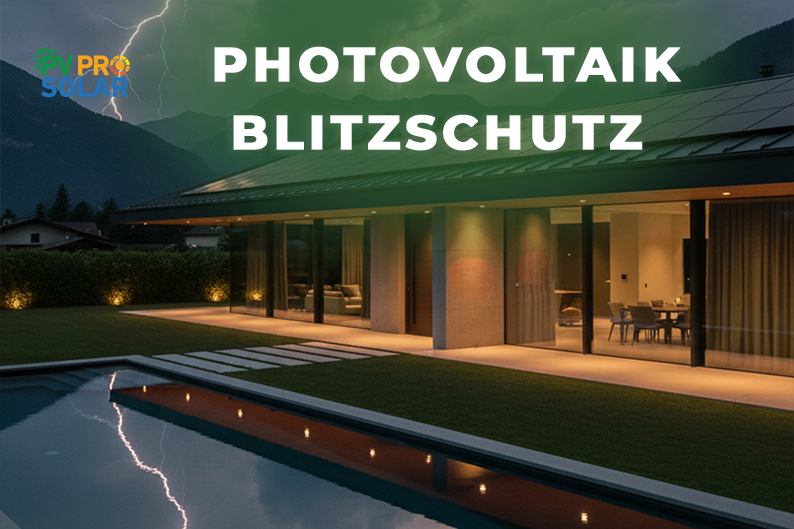
Photovoltaic lightning protection is simpler than many homeowners expect: an external lightning protection system (lightning rod) is generally not legally required for a PV system on a standard family home, and the system itself does not attract lightning. Surge protection in the meter cabinet, on the other hand, is part of practically every new installation under the current German electrical standards. If your house already has a lightning protection system, the PV system must be properly integrated into it. This article explains what is mandatory, what insurers expect and which protection suits your roof.
Disclaimer: This article is intended for general informational purposes only and does not replace a site-specific assessment in accordance with applicable standards. Whether your system requires lightning protection, and to what extent, can only be determined on site by a qualified contractor or lightning protection specialist.
PVPro Solar GmbH
Bedarf klären · Daten senden · Angebot erhalten
Jetzt Anfrage sendenBedarf klären
Schritt 1
Daten senden
Schritt 2
Angebot erhalten
Schritt 3
Photovoltaic lightning protection: key facts at a glance
| Question | Answer |
|---|---|
| Does the PV system increase the risk of a strike? | No, according to VDE, because it hardly changes the building height |
| Is external lightning protection mandatory? | Only if building law or the authorities require it (in Lower Saxony § 42 NBauO); usually not for a normal home |
| Is surge protection needed? | Yes, under DIN VDE 0100-443 / -534 for new and modified electrical installations |
| Lightning protection system already in place? | The PV system must be integrated, with a separation distance per DIN EN 62305-3 |
| What about insurance? | VdS 2010 is a non-binding recommendation; your policy is what counts |
| Who plans the protection? | An electrical contractor (PV, surge protection) and a lightning protection specialist (external system) |
Does a PV System Increase the Risk of a Lightning Strike?
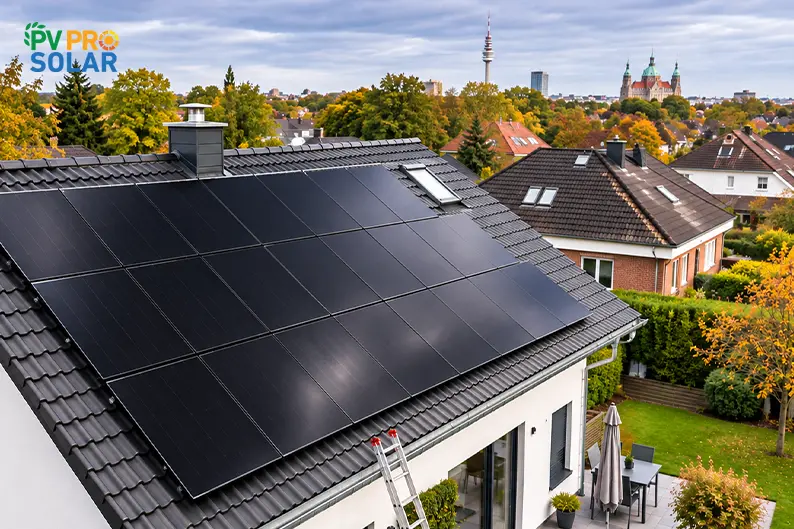
One of the most common concerns can be addressed immediately: no, a rooftop photovoltaic system does not attract lightning. The VDE Committee for Lightning Protection and Research (VDE ABB) states that a rooftop system does not increase the probability of a strike, because it does not significantly change the height of the building. Flat roofs with tilted mounting frames are a little different: there, the frames can be among the preferred strike points on the roof.
What does change is the potential extent of the damage. If lightning strikes the building, the absence of suitable protection can damage not only the PV system but also the household electronics. Besides direct strikes there are nearby strikes: according to VDE ABB, lightning within about 500 metres can induce surges in the cables that endanger the inverter, battery and appliances. Protection is therefore not about a higher risk of being struck, but about limiting the consequences if it happens.
Is Lightning Protection Mandatory for Photovoltaic Systems?
It is important to distinguish between the two types of protection, as they are treated differently. You also need to separate statutory requirements, technical standards and insurance conditions.
External Lightning Protection – Usually Optional for Residential Buildings
A lightning rod system is generally not mandatory for PV installations on standard private homes. The German state building codes only require a lightning protection system for structures where, due to their location, construction or use, a lightning strike is likely or could have serious consequences. In Lower Saxony this rule is in § 42 NBauO. It typically concerns special buildings with particular uses, not the ordinary detached or terraced house. Where no lightning protection is required, you as the owner decide which protective measures to take. Installing a PV system does not in itself trigger an obligation to add a lightning rod.
Internal Surge Protection under DIN VDE 0100-443 and -534
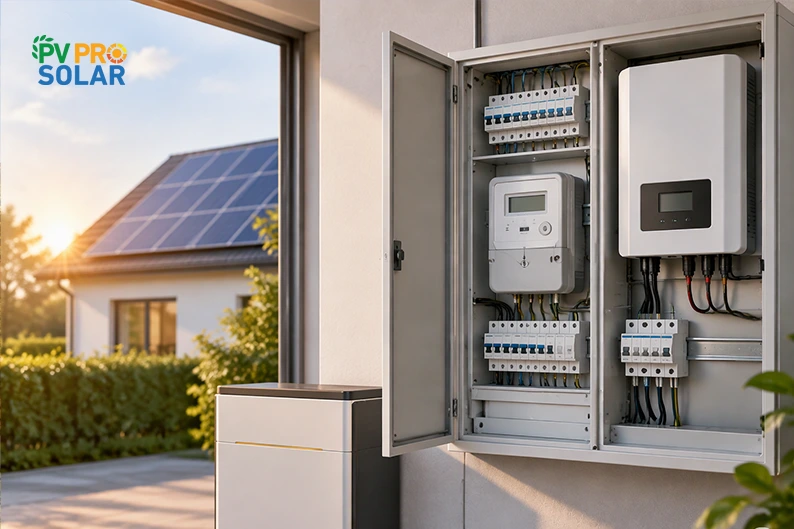
Surge protection is a different matter. The standards DIN VDE 0100-443 and DIN VDE 0100-534 provide for it in residential buildings; the transition period for the previous editions ended on 14 December 2018. Since then, new electrical installations and modified or extended parts have been planned according to these standards. Because connecting a PV system extends the house installation, surge protection in the meter cabinet is practically part of every new PV installation today. Legally this is a technical standard, not a statute. However, § 13 of the Low Voltage Connection Ordinance (NAV) requires installations to follow the generally recognised rules of technology, which include the VDE standards.
Photovoltaic lightning protection and insurance: VdS 2010
Even where there is no statutory obligation, your insurer may set requirements. The VdS 2010 guideline of the German insurance industry (GDV) on risk-oriented lightning and surge protection lists objects for which insurers recommend protective measures. It is non-binding and only becomes binding if your policy refers to it. It is therefore worth checking your policy before planning. For more information, see our article on photovoltaic insurance.
From What System Size Does Lightning Protection Make Sense?
There is no statutory kWp threshold, and a definitive assessment can only be made case by case. As a guide:
- Technical literature cites the insurers’ guideline VdS 2010 as recommending external lightning protection of lightning protection class III for buildings with PV systems above 10 kW. This is a recommendation, not a legal obligation.
- External protection is especially advisable where the building is in an exposed location, such as a freestanding property or a hilltop site.
- The need for protection also increases for flat roofs with tilted modules or where the PV installation forms the highest point of the building.
The basis for a sound decision is the risk assessment under DIN EN 62305-2 (VDE 0185-305-2). For non-specialists, the necessary scope of protective measures is difficult to determine, so the judgement of a qualified contractor is essential.
External and Internal Lightning Protection Explained
A complete lightning protection system consists of two complementary components. They work together; they do not replace one another. The technical basis is the DIN EN 62305 (VDE 0185-305) series; for PV systems there is Supplement 5 to DIN EN 62305-3.
External Lightning Protection
External lightning protection, commonly known as a lightning rod system, is designed to prevent direct strikes to the solar modules. Air-termination rods or conductors intercept the lightning, and down conductors carry the current safely into the earthing system. The modules, mounting structure and cabling must all lie within the protected zone of the air-termination system. In the preferred solution, an isolated lightning protection system, a separation distance is kept between the lightning protection system and the PV installation to prevent flashover. According to VDE ABB, this is typically about 0.5 to 1 metre in the roof area. The exact value must be calculated for each building.
Internal Lightning Protection and Surge Protection
Internal lightning protection safeguards the system against the effects of overvoltage. Its central element is equipotential bonding: conductors and metallic components are connected to the main earthing terminal. In addition, surge protective devices (SPDs) are installed. Whether a Type 1 device (lightning current capable) or a Type 2 device is needed, and whether on the direct current (DC) or alternating current (AC) side, depends on the protection concept. PV-specific installation rules are also set out in DIN VDE 0100-712.
Grounding and Equipotential Bonding – The Minimum Requirement
Most residential properties do not need a separate external lightning protection system. Even then, equipotential bonding is required to ensure personal safety and equipment protection. The metallic mounting structure is connected to the building’s main earthing terminal, and suitable surge protective devices are added. These minimum measures limit damage to the system, even though they cannot prevent a direct strike.
Photovoltaic lightning protection with an existing lightning rod system
If your building already has a lightning rod, the PV system must not weaken that protection. It has to fit into the existing lightning protection system. In practice there are two approaches:
- Separation distance maintained: modules and frame stay within the protected zone and far enough from air-termination and down conductors. Additional air-termination rods are added if needed. Lightning currents then do not flow into the PV system.
- Separation distance not possible: if the roof is too tight, the frame is bonded to the lightning protection system in a way that can carry lightning current. Partial lightning currents can then flow into the system, so lightning current arresters (Type 1) and further measures such as shielded DC cables are needed.
The installation must not simply cover or move existing air-termination conductors. PV planning and the lightning protection specialist should therefore work together early. Fire safety also matters when planning the roof layout, for example on terraced houses: see new PV fire separation rules in Lower Saxony.
Surge protection: which devices go where?
Photovoltaic lightning protection by protection concept: overview
The following overview follows the VDE ABB recommendations based on Supplement 5 to DIN EN 62305-3. It shows the principle; the specific selection is made by the contractor.
| Situation | DC side / inverter | Grid connection point in the house |
|---|---|---|
| No external lightning protection | Frame bonded to main earthing terminal; Type 2 at the inverter, plus Type 2 at the module array for DC cables longer than approx. 10 m | Type 2 |
| Lightning protection present, separation distance maintained | Type 2 at the inverter; plus Type 2 at the module array for DC cables longer than approx. 10 m | Type 1 |
| Lightning protection present, separation distance not maintained | Type 1 before and after the inverter (without shielding) | Type 1 |
Many inverters already have integrated surge protective devices. Whether these are sufficient for the protection concept is checked by the electrical contractor based on the manufacturer’s specifications.
What Does Lightning Protection for a PV System Cost?
Costs depend heavily on which measures are needed and on the building itself. Flat-rate prices would be misleading here, so we list the cost factors instead of made-up figures.
What the cost of photovoltaic lightning protection depends on
- Surge protection: Type 2 or Type 1 devices, space in the meter cabinet, and whether the inverter already includes arresters.
- Equipotential bonding: cable route from the roof to the main earthing terminal and the condition of the existing earthing.
- External lightning protection: roof shape, building size, number of air-termination rods and down conductors, earthing system. This is by far the largest item.
- Existing lightning protection system: whether it has to be adapted or extended so that the separation distance works.
Actual costs may differ considerably depending on roof design, system size and the structure of the property. A reliable quotation can only be provided after an on-site inspection. You can request one via our free photovoltaic quote.
Retrofitting photovoltaic lightning protection: checking an existing system
There is no general obligation to upgrade older systems to the current standards. It can still make sense, particularly when a battery is added, the inverter is replaced or the meter cabinet is rebuilt, because the modified part must then meet the current standards. An existing lightning protection system should also be inspected regularly by a specialist; inspection intervals follow DIN EN 62305-3 and the protection class. For the cost of regular checks, see photovoltaic maintenance costs.
Why Lightning Protection Should Be Left to Professionals
With lightning protection, more than with almost any other component, faults can be dangerous. A poorly designed or improperly installed lightning protection system can even increase the damage during a strike, for example if the separation distance is wrong or components are connected incorrectly. Calculating the separation distance and installing to standard should therefore always be left to qualified professionals. Under § 13 NAV, work on the house installation may in any case only be carried out by a company listed in the grid operator’s installer register.
Photovoltaic lightning protection with PVPro Solar: how we work
As a specialist contractor, we plan and install your photovoltaic system with our own certified installers, including equipotential bonding and suitable surge protection, to standard and fully documented. During planning we check whether a lightning protection system exists and lay out the module array so that the separation distance can be maintained. If external lightning protection is needed, we coordinate the PV system with the lightning protection specialist. You can read how the installation works step by step in solar panel installation in Hannover.
Conclusion
External lightning protection is not mandatory for most private PV systems, and the system does not increase the risk of a strike. Surge protection under DIN VDE 0100-443 / -534 and proper equipotential bonding, however, are part of every professional installation. If the house has a lightning rod, the PV system must be integrated with a separation distance. In exposed locations, on flat roofs or if your insurer requires it, a closer look is worthwhile. Good photovoltaic lightning protection therefore starts at the planning stage, not after the first thunderstorm.
Are you planning a new PV system and want surge and lightning protection solved properly from the start? Request your no-obligation quote now. You can also call us on 0511 3360603 or message us on WhatsApp at +49 176 2399 8536.
Sources:
- VDE ABB: Lightning protection of PV systems (based on Supplement 5 to DIN EN 62305-3), German
- VDE ABB: Risk in lightning protection (building codes, VdS 2010), German
- § 13 Low Voltage Connection Ordinance (NAV), German
- DIN EN 62305-1 to -4 (VDE 0185-305), Supplement 5 to DIN EN 62305-3; DIN VDE 0100-443, -534 and -712
- VdS 2010, Risk-oriented lightning and surge protection (GDV)
Does a solar installation attract lightning?
No. According to VDE, a rooftop PV system does not increase the probability of a strike because it hardly changes the building height. It does, however, increase the potential damage if suitable protection is missing.
Is lightning protection mandatory for PV systems?
External lightning protection is usually not required on normal homes, only if the building code demands it because of location, construction or use (in Lower Saxony § 42 NBauO). Surge protection under DIN VDE 0100-443 and -534, on the other hand, is part of new and extended electrical installations.
From what system size is lightning protection recommended?
There is no statutory kWp threshold. The insurers' guideline VdS 2010 is cited as recommending external lightning protection from about 10 kW. It is only binding if your insurance policy requires it.
What does lightning protection for a PV system cost?
That depends on whether only surge protection and equipotential bonding are needed or a complete external lightning protection system. The external system is the largest item and depends on roof shape and building size. Exact costs can only be determined after an on-site inspection.
Is standard grounding sufficient?
For many homes without a lightning rod, bonding the mounting frame to the main earthing terminal and suitable surge protective devices are the key measures. They do not protect against a direct strike. Whether that is enough depends on location, roof and insurance.
What changes if my house already has a lightning rod?
Then the PV system must be integrated into the lightning protection. Ideally it keeps the calculated separation distance from air-termination and down conductors. If that is not possible, it is bonded in a lightning-current-capable way and needs Type 1 arresters.
Does my inverter already have surge protection?
Many inverters have integrated surge protective devices. Whether they are sufficient for your protection concept, for example with long DC cables or an existing lightning rod, is checked by the electrical contractor based on the manufacturer's specifications.
Note: This article provides a general overview (as of November 2026) and does not replace planning under DIN EN 62305 or individual legal advice.
PVPro Solar GmbH
In 3 Schritten zur PV-Anfrage
Bedarf klären · Daten senden · Angebot erhalten
Jetzt Anfrage sendenBedarf klären
Schritt 1
Daten senden
Schritt 2
Angebot erhalten
Schritt 3