
Is Photovoltaics Worth It in 2026? When Does a Solar System Really Pay Off?

The German electricity market is sending mixed signals. On the one hand, household electricity prices have risen by more than 40 percent since 2021 and now stand at around 30 to 35 cents per kilowatt-hour. On the other hand, the feed-in tariff will decrease further in 2026, currently standing at roughly 8 cents per kWh for systems up to 10 kWp.
Many homeowners, therefore, ask themselves: Is photovoltaics still worthwhile if the compensation for feeding electricity into the grid continues to decline?
The answer is clear: Yes, photovoltaics will be worth it in 2026, more than ever before. The key shift lies in the economic perspective. Today, the primary financial driver of a solar system is no longer feeding electricity into the grid but self-consumption.
Homeowners who use the electricity they generate themselves effectively save around 30 cents per kWh instead of earning only 8 cents per kWh through feed-in tariffs. This difference of more than 22 cents per kilowatt-hour makes photovoltaics one of the most profitable energy investments currently available to homeowners in Germany.
What Does a Photovoltaic System Cost for a Single-Family Home in 2026?
The cost of photovoltaic systems for single-family homes has changed significantly in recent years. Ten years ago, a 10 kWp system often cost €25,000 or more. Today, solar system prices in 2026 are considerably lower thanks to economies of scale, more affordable module production, and increased competition in the installation market.
A realistic overview:
- 5 kWp system (including inverter and installation): approx. €7,000 – €10,000
- 10 kWp system (including inverter and installation): approx. €12,000 – €17,000
- 15 kWp system (including inverter and installation): approx. €17,000 – €23,000
- Battery storage (8–12 kWh): approx. €6,000 – €12,000 additional
A cost-benefit comparison shows how compelling photovoltaics can be. A 10 kWp system in Lower Saxony generates roughly 9,000 to 9,500 kWh per year. With a self-consumption rate of 35% and an electricity price of €0.32 per kWh, homeowners save around €1,000 per year from self-used solar electricity alone, plus the 2026 feed-in tariff for the surplus energy exported to the grid.
The result is a solid economic case supported by concrete numbers.
How Do You Calculate the Return and Payback Period of a Photovoltaic System?
What Is the Payback Period for Photovoltaics?
The photovoltaic payback period describes the time required for energy savings to fully offset the initial investment costs.
For a typical 10 kWp system without battery storage in northern Germany, the calculated payback period is between 9 and 13 years, depending on:
- the self-consumption rate
- local electricity prices
- financing conditions
Modern solar modules typically have a guaranteed lifespan of 25 to 30 years, meaning that after the payback period, homeowners can expect 15 to 20 years of nearly cost-free electricity generation.
Which Factors Influence Photovoltaic Returns?
Calculating the return on a photovoltaic investment is not an exact science, but several factors are crucial:
- Self-consumption rate – The more solar power used directly in the household, the greater the savings.
- Local electricity prices – Higher electricity prices increase the value of each kilowatt-hour of self-consumed energy.
- Roof orientation and tilt – South-facing roofs with a tilt of 30 to 35 degrees are ideal, though east-west systems can also be economically viable.
- Future electricity price trends – Rising electricity prices automatically increase the system’s financial return.
For example: A 10 kWp system with an investment of €15,000, a 40% self-consumption rate, and an electricity price of €0.32 per kWh can generate an internal rate of return (IRR) of 6–8% per year, a level that traditional savings products or bonds rarely achieve today.
Saving electricity costs with photovoltaics, therefore, also means making a secure and profitable capital investment.
How Much Electricity Does a Single-Family Home Use, and How Much Can a PV System Cover?
An average four-person household in Germany consumes 4,000 to 5,500 kWh of electricity per year.
A 10 kWp system in Lower Saxony produces about 9,000 kWh annually, theoretically twice the household demand. The challenge lies in the timing mismatch: the PV system produces electricity during the day, while households consume much of their electricity in the evening.
Without battery storage, the direct self-consumption rate of solar electricity is typically around 25–35% of total production.
To significantly reduce electricity bills with a solar system, energy-intensive appliances such as washing machines, dishwashers, or dryers should ideally be operated during the daytime, either manually or automatically through an energy management system.
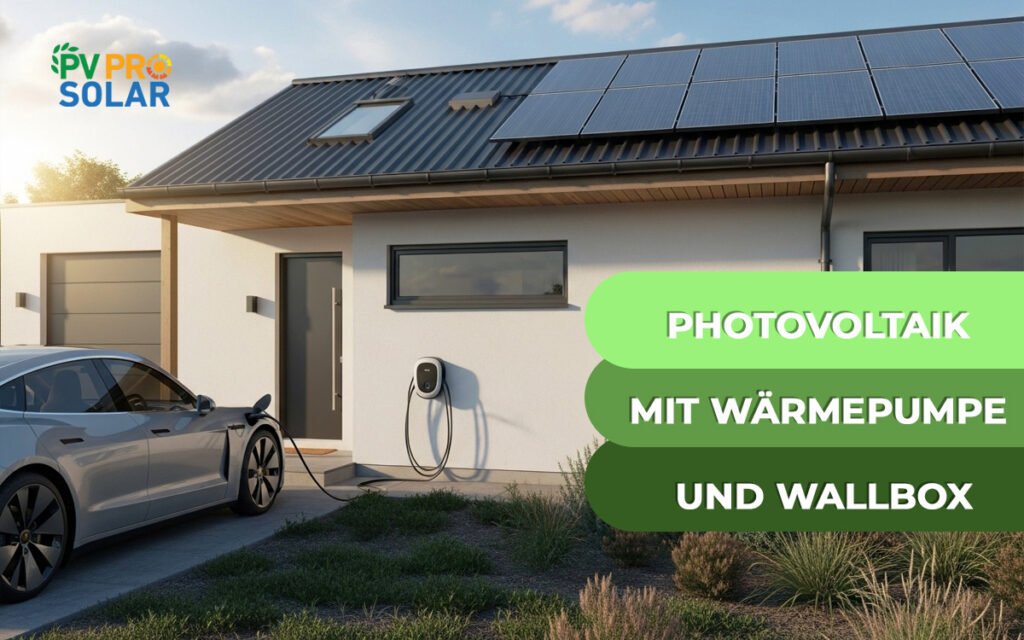
Households with a heat pump or EV wallbox can use solar power even more efficiently, increasing self-consumption rates to 50–80%. This makes photovoltaic self-consumption the key lever for economic efficiency.
Is Photovoltaics Worth It With or Without Battery Storage?
Whether photovoltaics with battery storage is worthwhile depends largely on individual consumption patterns.
Households that consume little electricity during the day, such as full-time workers who are away from home, benefit greatly from a battery storage system. Without storage, surplus solar electricity is fed into the grid; with storage, it can be used later in the evening.
However, photovoltaics without storage can still be economically sensible if:
- The budget is limited, or
- The household has high daytime consumption (for example, through home offices, electric heating systems, or continuous commercial operations).
In such cases, the self-consumption rate may reach 40–50% even without a battery.
Homeowners who want to maximize photovoltaic self-consumption and have the necessary budget should consider investing in storage over the long term, even though battery systems typically take 10 to 14 years to amortize, slightly longer than the PV system itself.
Which Incentives Make Photovoltaics Even More Attractive in 2026?
Despite declining feed-in tariffs, the funding landscape for solar systems in 2026 remains attractive, if you know where to look.
Key programs include:
- KfW Photovoltaic Funding 2026 (KfW 270): Low-interest loans for solar systems and storage solutions, currently starting at 4.45% effective annual interest—significantly cheaper than traditional bank loans.
- VAT Exemption for Photovoltaics: Since 2023, solar installations on residential buildings have benefited from 0% VAT, saving €2,850 on a €15,000 system.
- Tax Advantages for Photovoltaics: Operators of small systems up to 30 kWp are exempt from income tax on solar electricity revenue.
- EEG Feed-In Tariff 2026: Legally guaranteed compensation for 20 years, ensuring long-term planning security.
- Regional Photovoltaic Incentives in Lower Saxony: Additional state programs and municipal subsidies for homeowners in Hanover, Braunschweig, and other cities.
Together, these measures can significantly reduce the effective investment cost and shorten the photovoltaic payback period. With all available incentives, the net investment for a 10 kWp system can drop below €11,000.
Who Benefits Most from Photovoltaics and Who Less?
Is Photovoltaics Worth It for Retirees?
Yes, particularly for retirees. Those who spend more time at home during the day can use solar electricity directly instead of storing it in batteries. This can increase the self-consumption rate to 40–55%.
Retirees also benefit from the tax exemption for small systems and often have the capital required to finance the investment without loans, further improving returns.
Is Photovoltaics Worth It in Low-Sun Regions?
Northern Germany is often considered less sunny than Bavaria, but the difference is smaller than many assume.
- Hanover: approx. 1,650 sunshine hours per year
- Munich: approx. 1,900 sunshine hours per year
The difference in annual production for a 10 kWp system is about 1,000 kWh, corresponding to roughly €300 per year. Considering an investment of €15,000, this difference is relatively small.
Photovoltaics, therefore, remains highly worthwhile in Lower Saxony, Bremen, and Wolfsburg.
Is Photovoltaics Worth It on Older Buildings?
In principle, yes—but older roofs should be professionally inspected before installation. In some cases, roof renovation may be required before solar modules can be mounted.
If a roof replacement is already planned, combining it with a PV installation can be particularly efficient and may qualify for additional subsidies.
Older buildings often have higher energy demand, making solar installations even more valuable.
Example Calculation: How Long Until a Photovoltaic System Pays for Itself?
Consider a four-person household in Hanover with an annual electricity consumption of 4,800 kWh:
- System: 10 kWp, total cost €15,000 (after VAT exemption)
- Annual production: approx. 9,200 kWh
- Self-consumption (35%): 3,220 kWh × €0.32 = €1,030 savings
- Feed-in (65%): 5,980 kWh × €0.082 = €490 feed-in revenue
Total annual benefit: approx. €1,520 Payback period: approx. 9.9 years
Adding a battery storage system (cost: approx. €8,000) increases self-consumption to 65%, raising annual savings to around €1,920. The battery would therefore amortize in roughly 12 years.
If the system also powers a heat pump or charges an electric vehicle via a wallbox, the economic performance improves further because more self-generated electricity is used instead of purchasing expensive grid electricity.
Step by Step: How to Plan a PV System
- Analyze energy demand: Review electricity bills from the past three years, determine consumption patterns, and identify peak loads to determine the optimal system size.
- Check the roof: Assess structural capacity, orientation, tilt, and potential shading from trees or neighboring buildings.
- Request and compare offers: Obtain at least three quotes from certified installers, paying attention to module quality, warranty terms, and included services.
- Apply for subsidies: Submit KfW applications before construction begins, confirm VAT exemption with the supplier, and research regional incentive programs.
- Installation and commissioning: Hire a certified installer, register the system with the grid operator, and enter it into the Market Master Data Register.
- Optimize self-consumption: Adjust consumption habits, install an energy management system, and consider adding battery storage or a wallbox if needed.
Conclusion: Is a Solar System Really Worth It in 2026?
The answer is clear: photovoltaics will absolutely be worth it in 2026, regardless of whether you live in Hanover, Bremen, Wolfsburg, or elsewhere in Lower Saxony.
The decline in feed-in tariffs is not a disadvantage; rather, it encourages homeowners to maximize self-consumption. Using solar electricity yourself saves three times more than selling it to the grid.
Solar system costs in 2026 are at a historic low, the funding landscape remains attractive, and modern PV technology has reached an impressive level of maturity.
Anyone investing today can benefit for 25 to 30 years—with stable returns, protection against rising electricity prices, and a meaningful contribution to the energy transition.
The real question is not whether photovoltaics are worthwhile, but when you will get started.
Get a free consultation now!
PVPro Solar GmbH supports you from the initial planning stage to the turnkey installation; transparent, professional, and firmly rooted in Lower Saxony.
Visit PVPro Solar GmbH and request your personalized offer.
Photovoltaics are particularly beneficial when self-consumption is high—that is, when electricity generated during the day is used directly in the household. Homes with heat pumps, EV wallboxes, or home offices benefit the most because they can consume a large share of their solar electricity. High local electricity prices, favorable south-facing roofs, and full use of available subsidies also significantly increase profitability.
Yes. Feed-in tariffs were never the main driver of profitability as long as self-consumption is prioritized. Self-used solar electricity saves 30–35 cents per kWh, while feeding electricity into the grid generates only about 8 cents per kWh. The more electricity is consumed on-site—through battery storage, heat pumps, or wallboxes—the less relevant the feed-in tariff becomes. Photovoltaics in 2026, therefore, remains worthwhile not despite, but independent of, the reduced feed-in tariff. When is photovoltaics most worthwhile?
Is photovoltaics still worthwhile despite declining feed-in tariffs in 2026?