
Are Solar Panels Worth It in Germany 2025?

More and more people in Germany are asking themselves in 2025 if solar panels are still worth it. With rising electricity prices, attractive subsidy programs, and modern technology, photovoltaics are attractive for households, businesses, and industrial users. In this article, you get a full overview of costs, savings, returns, regional differences, and subsidies. You will also find calculation examples to assess profitability. This way, you can decide if a solar panel system makes sense for you in 2025.
What factors determine the profitability of a solar system in Germany in 2025?
Profitability depends on several aspects:
- Purchase costs for modules, inverters, storage, and installation
- Operating costs such as insurance, maintenance, and cleaning
- Electricity prices and forecasts until 2030
- Feed-in tariff for surplus solar power
- Self-consumption rate with or without storage
- Lifetime and efficiency of modules
- Location and solar irradiation
- Subsidy programs and tax regulations
The better the system is planned and adapted to consumption, the higher the return.
How high are the purchase costs for solar systems in 2025?
Prices have fallen in recent years. In 2025:
- Small systems (5 kWp): approx. €7,000–9,000
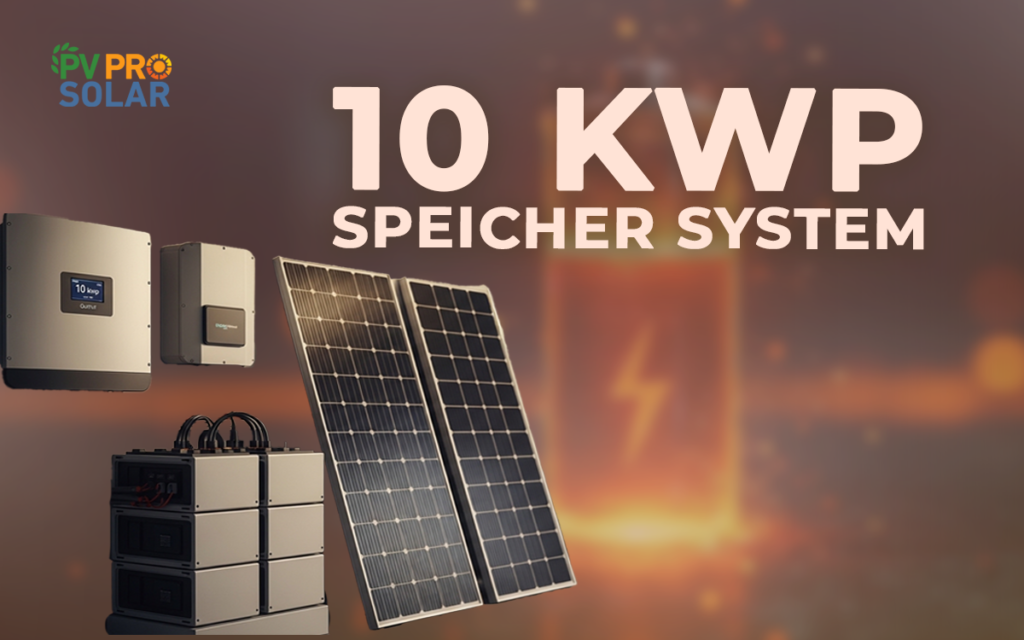
- Medium systems (10 kWp): approx. €13,000–16,000
- Large systems (15–30 kWp): from €20,000
- Battery storage (10 kWh): approx. €7,000–9,000
Example calculation:
A 10 kWp system with storage costs around €22,000–25,000. With 70% self-consumption, a household saves about €2,200 per year (at €0.40/kWh).
How will electricity prices develop in Germany in 2025?
- Average household electricity price: approx. €0.42–0.45/kWh
- Business electricity: approx. €0.30–0.35/kWh
- Forecasts until 2030: further increases due to grid fees and CO₂ costs
Each self-generated kilowatt-hour replaces expensive grid power and increases profitability.
What role does the feed-in tariff play in 2025?
- Systems up to 10 kWp: approx. €0.081/kWh
- Systems up to 40 kWp: approx. €0.075/kWh
- Systems over 40 kWp: approx. €0.064/kWh
Self-consumption is far more lucrative, saving about €0.42 per kWh. Feed-in remains an extra income source but is not the main driver.
What subsidies are available for solar systems in 2025?
- 0% VAT on PV systems and storage (since 2023)
- KfW programs for solar, storage, and charging infrastructure
- Regional subsidies: e.g., Lower Saxony for storage, Bavaria for rooftop PV, NRW for tenant electricity projects
- Business subsidies via tax depreciation options
How long does the amortization of a solar system take in 2025?
- Without storage: 7–10 years
- With storage: 10–13 years
- Module lifespan: 25–30 years
- Return after amortization: 10–15 years of nearly free power
Are solar panels with storage worth it in 2025?
Advantages:
- Self-consumption increases from about 30–40% to up to 70%
- Greater independence from the grid
- Protection from rising electricity prices
- Especially attractive with EVs or heat pumps
Example:
A household with 5,000 kWh annual consumption can cover 3,500 kWh with storage. That equals about €1,400 in savings per year.
What technical developments make solar panels more attractive in 2025?
- Half-cell modules with higher efficiency (up to 23%)
- Bifacial modules with backside absorption for extra yield
- Smart inverters with energy management
- LFP battery storage for longer lifespan
- Smart-home integration for load management
How do solar systems differ for private, business, and industrial use?
- Households: 5–15 kWp with storage, focus on self-consumption
- Businesses: 30–200 kWp, high daytime load, short payback times
- Industry: Rooftop or ground-mounted systems over 1 MW, direct supply to production lines
What regional differences exist for solar panels in Germany in 2025?
- Southern Germany (Bavaria, Baden-Württemberg): up to 1,200 kWh/kWp per year
- Northern Germany (Lower Saxony, Bremen, Schleswig-Holstein): approx. 950–1,050 kWh/kWp
- Eastern Germany (Saxony, Brandenburg): 1,050–1,150 kWh/kWp
Example: A 10 kWp system in Munich generates about 11,800 kWh/year.
The same system in Bremen generates about 9,800 kWh/year.
How are interest rates and financing options developing in 2025?
- Bank loans for PV: 3–5%
- KfW loans: from 2.5%
- Leasing and contracting models are available for businesses
- Advantage: electricity savings usually exceed loan repayments
Comparison: Were solar panels worth it in 2023, 2024, and 2025?
- 2023: Higher system prices, but rising electricity costs
- 2024: More subsidies, cheaper storage
- 2025: Best balance between lower costs, higher electricity prices, and strong subsidies
Profitability has increased year by year.
Example calculation for a four-person household in 2025
- Consumption: 5,500 kWh/year
- System: 10 kWp, cost €15,000
- Storage: 10 kWh, cost €8,000
- Total cost: €23,000
- Self-consumption: 70% = 3,850 kWh → €1,617 savings
- Feed-in: 1,650 kWh x €0.081 = €134
- Total annual savings: €1,751
- Amortization: approx. 12 years
Solar panels are more worthwhile in Germany in 2025 than ever before. Falling costs, rising electricity prices, and attractive subsidies make them profitable. With storage, EVs, or heat pumps, the returns improve even further. Regional differences exist, but even in northern Germany, systems are worthwhile in the long run. After amortization, owners benefit from many years of nearly free power while contributing to climate protection.
Yes. Even without storage, systems are profitable. With self-consumption and feed-in tariff, they pay off in about 7–10 years.
Panels: 25–30 years, inverters: 10–15 years, storage: 10–12 years. Are solar panels in Germany without storage worth it in 2025?
How long do solar panels and batteries last in 2025?