
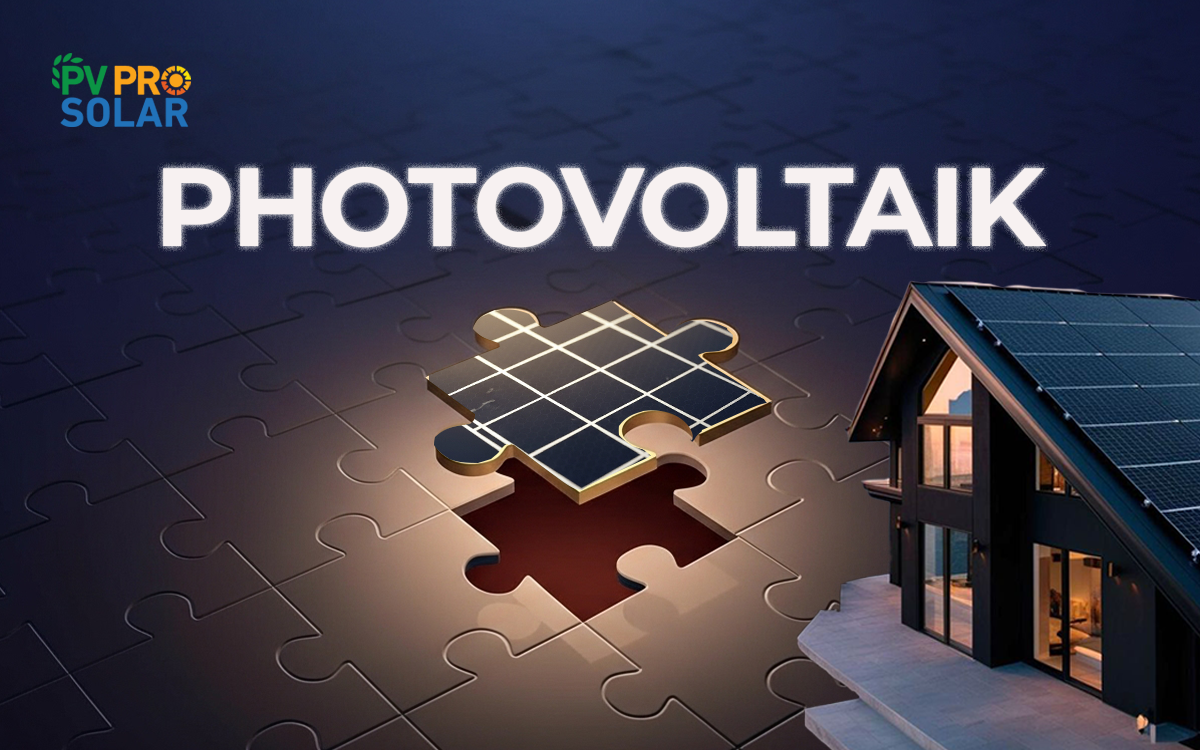
Photovoltaics: Technology, How It Works, and Key Components Explained
Diese Seite ist auch auf Deutsch verfügbar
Artikel auf Deutsch lesen
Photovoltaics is now one of the most important technologies for sustainable electricity generation. More and more homeowners and businesses are choosing photovoltaic systems to reduce their energy costs, become less dependent on rising electricity prices, and contribute to climate protection.
But how does photovoltaics actually work? What components make up a modern solar power system? What are the differences between rooftop and ground-mounted installations? And what factors influence electricity generation?
This page provides a comprehensive overview of the technology, its key components, and the various applications of modern photovoltaic systems.
PVPro Solar GmbH
Bedarf klären · Daten senden · Angebot erhalten
Jetzt Anfrage sendenBedarf klären
Schritt 1
Daten senden
Schritt 2
Angebot erhalten
Schritt 3
What Is Photovoltaics?
Photovoltaics refers to the direct conversion of sunlight into electrical energy. This technology is based on the so-called photovoltaic effect. Solar cells generate electricity from solar radiation without the need for moving parts or fossil fuels.
The technology is used in both residential and commercial settings. From single-family homes and industrial buildings to large-scale solar farms, photovoltaic systems make an important contribution to sustainable energy supply.
The electricity generated can be used directly on-site, stored in a battery system, or fed into the public power grid.
How Does a Photovoltaic System Work?
The process of generating electricity can be divided into four simple steps.
1. Sunlight Reaches the Solar Cells
Solar modules consist of numerous solar cells. When sunlight strikes these cells, electrons are set in motion, generating direct current (DC) electricity.
2. The Inverter Converts the Electricity
The DC electricity produced by the modules cannot be used directly by most household appliances. Therefore, an inverter converts the DC electricity into alternating current (AC).
3. Using Solar Power
The electricity generated is first consumed within the household or business. This reduces the amount of electricity that must be purchased from the grid.
4. Storage or Grid Feed-In
Any surplus energy can either be stored in a battery storage system or fed into the public electricity grid.
The Most Important Components of a Photovoltaic System
A modern photovoltaic system consists of several components that must work together seamlessly.
Solar Modules
Solar modules are responsible for the actual generation of electricity. They consist of multiple solar cells that convert sunlight into electrical energy.
Modern modules are characterized by:
- High efficiency
- Long service life
- Weather resistance
- Low maintenance requirements
Inverter
The inverter is often referred to as the heart of the system. It converts the generated DC electricity into usable AC electricity.
In addition, it monitors system performance and ensures safe operation.
Mounting System
The mounting system secures the solar modules to the roof or ground-mounted structure. It must withstand wind, snow, and other weather conditions over the long term.
Battery Storage
A battery storage system enables the use of solar power even after sunset, significantly increasing self-consumption.
Benefits of battery storage include:
- Greater independence from utility providers
- Better utilization of self-generated electricity
- Reduced electricity costs
Monitoring System
Digital monitoring solutions allow real-time system monitoring. Operators can view energy yields, consumption data, and performance metrics at any time.
Types of Photovoltaic Systems
Different types of systems are used depending on the building and application.
Photovoltaics on Pitched Roofs
Pitched roofs often provide ideal conditions for installing solar modules.
Advantages:
- Good orientation options
- High energy yields
- Proven mounting technology
- Ideal for single-family homes
Photovoltaics on Flat Roofs
On flat roofs, modules are mounted on specially designed support structures to achieve the optimal angle.
Advantages:
- Flexible module positioning
- Efficient use of available space
- Particularly suitable for commercial buildings
Ground-Mounted Solar Systems
Ground-mounted systems are installed on undeveloped land and are often used for commercial electricity generation.
Advantages:
- Large installable capacity
- High energy yields
- Cost-effective electricity production
What Factors Influence the Performance of a Photovoltaic System?
The electricity output of a solar installation depends on several factors.
Module Orientation
In Germany, south-facing systems often achieve the highest annual yields. East-west systems can also be economically viable.
Roof Pitch
The roof angle affects solar irradiation and therefore the energy yield.
Shading
Trees, neighboring buildings, or chimneys can reduce system performance.
Location
Regional differences in solar irradiation influence annual electricity production.
Module Type
High-performance modules enable better use of available space and higher energy yields.
Component Quality
High-quality inverters, mounting systems, and battery storage solutions contribute to the long-term efficiency of the system.
Advantages of Photovoltaics
Photovoltaics offers numerous economic and environmental benefits.
Lower Electricity Costs
Self-generated solar power reduces reliance on expensive grid electricity.
Greater Energy Independence
With their own solar system, operators become less dependent on utility companies and rising energy prices.
Sustainable Energy Generation
Photovoltaics generates electricity without emissions and utilizes a virtually unlimited energy source.
Long-Term Investment
Modern systems typically have operational lifespans of 25 to 30 years or more.
Increased Property Value
A high-quality solar installation can increase the attractiveness and market value of a property.
Integration with Other Technologies
Photovoltaics can be seamlessly combined with battery storage systems, heat pumps, and EV charging stations (Wallboxes).
Economic Viability of Photovoltaic Systems
The profitability of a photovoltaic system depends on several factors:
- System size and capacity
- Self-consumption rate
- Electricity prices
- Investment costs
- Battery storage capacity
- Site-specific conditions
The greater the share of self-generated electricity that is consumed on-site, the greater the financial savings.
For more information on profitability, see our article discussing whether photovoltaics is worth the investment.
How Large Should a Photovoltaic System Be?
The ideal system size depends on:
- Household electricity consumption
- Number of residents
- Use of an electric vehicle
- Availability of battery storage
- Available roof space
Professional planning ensures that the system is optimally tailored to individual needs.
Further information can be found in our guide on kilowatt-peak (kWp) ratings for solar systems.
Conclusion
Photovoltaics is a proven technology for sustainable electricity generation and offers numerous benefits for both households and businesses. Modern solar systems reduce energy costs, increase independence from the electricity market, and make an important contribution to the energy transition.
By combining high-quality solar modules, powerful inverters, and intelligent battery storage systems, operators can cover a significant portion of their electricity needs themselves and benefit from stable energy costs over the long term.
If you would like to learn more about profitability, optimal system sizing, or customized solutions, we recommend exploring our related guides and product pages.
High-quality modules often have a service life of 25 to 30 years or longer.
Yes. Although output is lower than under direct sunlight, electricity is still generated.
Photovoltaic systems are generally very low-maintenance. Regular visual inspections and system checks are usually sufficient.
A battery storage system can increase self-consumption and improve independence from the power grid.
Complete energy autonomy is possible, but it requires careful planning and sufficient storage capacity. Most systems significantly reduce grid dependence but do not eliminate it entirely.How Long Do Solar Modules Last?
Does Photovoltaics Work on Cloudy Days?
Does a Photovoltaic System Require a Lot of Maintenance?
Is Battery Storage Worthwhile?
Can I Become Completely Energy Self-Sufficient with Photovoltaics?
PVPro Solar GmbH
In 3 Schritten zur PV-Anfrage
Bedarf klären · Daten senden · Angebot erhalten
Jetzt Anfrage sendenBedarf klären
Schritt 1
Daten senden
Schritt 2
Angebot erhalten
Schritt 3