
Complete Solar Systems with Installation – What Do You Really Need to Know?

Purchasing a complete solar system with professional installation is a critical step for many homeowners and businesses on the path to long-term energy independence. While interest in photovoltaics continues to grow, many questions remain: What components are included in a complete system? How does installation work? Which roof areas are suitable? When is a storage unit worthwhile? And how can the system be expanded later? This comprehensive guide answers all these questions and provides a structured overview of everything you need to know about complete solar systems with installation. The focus is on quality, efficiency, and informed decision-making for long-term solar investments.
PVPro Solar GmbH
In 3 Schritten zur PV-Anfrage
Bedarf klären · Daten senden · Angebot erhalten
Jetzt Anfrage sendenBedarf klären
Schritt 1
Daten senden
Schritt 2
Angebot erhalten
Schritt 3
Why should you buy complete solar systems with installation, and what defines such a solution?
A complete solar system with professional installation offers numerous benefits that go beyond mere electricity generation. Professional installation reduces errors, ensures components are optimally coordinated, and guarantees reliable operation. Buyers also benefit from a smooth process from technical planning to commissioning. A fully installed PV system increases energy efficiency, improves self-sufficiency, and ensures that all safety standards are met. The combination of high-quality components and professional installation makes a complete solution especially attractive.
What components are included in a complete solar system with installation?
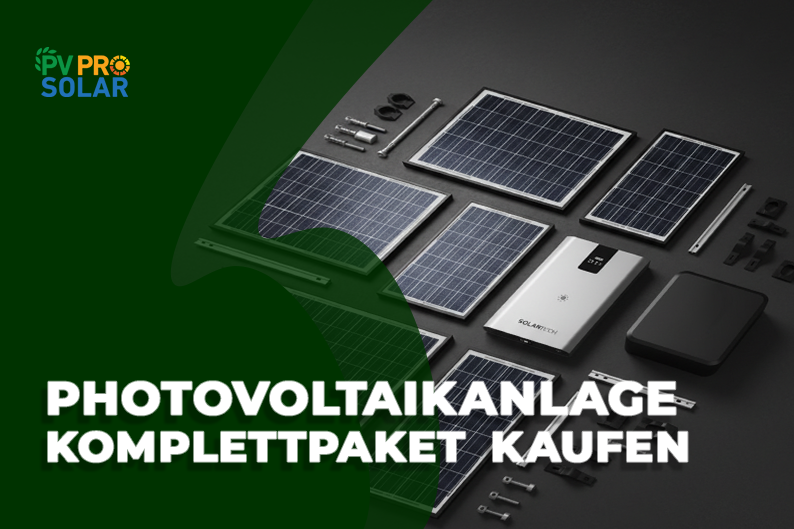
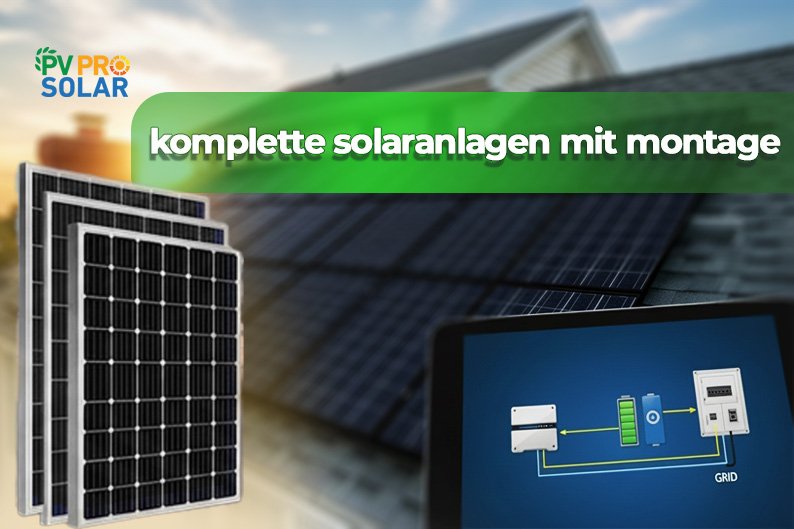
A complete solar system consists of modules, an inverter, mounting systems, cables, safety components, and optionally a storage unit. These elements are coordinated to create a functional, efficient, and long-lasting energy system. Modern photovoltaic solutions mostly use monocrystalline modules because of their high efficiency. The system is complemented by a mounting solution tailored precisely to the roof structure. Only a professionally configured system can ensure high energy output over the long term.
Which types of solar modules are particularly suitable for complete PV systems?
Complete PV systems predominantly use monocrystalline modules, which offer high efficiency, stable performance, and good output even in diffuse light. Polycrystalline modules are less commonly used, while thin-film modules are suitable for large surfaces or special building requirements. It is essential that modules meet certified quality standards and work optimally with the inverter. Choosing the right type depends on roof orientation, tilt, and desired energy production.
What advantages does a solar system with professional installation offer?
Professional installation increases safety, prevents installation errors, and ensures optimal energy flow between system components. Faulty DIY installations can lead to performance losses, defects, or even safety hazards. Specialized companies conduct precise roof assessments, select suitable mounting systems, and ensure proper electrical connections. This maximizes efficiency and extends the system’s lifespan.
How does the installation of a complete solar system work?
Installation begins with technical planning, a thorough roof assessment, and selection of suitable components. Next, mounting rails are attached, solar modules are secured, the inverter is installed, and electrical wiring is connected. Finally, the system is connected to the grid, safety tests are performed, and commissioning takes place. For an average single-family home, installation usually takes a few days, depending on roof type and number of modules.
Which roof areas are best suited for solar system installation?
Ideal conditions are south-facing roofs with a tilt between 25° and 40°, which provide the highest solar yield. East- and west-facing roofs can also be efficient if the system is properly designed. It is crucial that the roof area remains mostly free from shading. Trees, chimneys, or neighboring buildings can significantly reduce module performance. Flat roofs can also be optimized with mounting structures.
How do you calculate the optimal size of a complete PV system with installation?
The ideal size is determined based on annual electricity consumption, roof area, and desired self-consumption. A typical household needs between 4 and 10 kWp, while households with electric cars or heat pumps require larger systems. Professional planning also considers future energy needs and possible storage integration. A properly sized system avoids both undersizing and unnecessary overspending.
What role does the inverter play in a fully installed solar system?
The inverter converts direct current into alternating current and performs central tasks such as performance optimization, monitoring, and energy management. Modern models increase self-consumption, reduce losses, and offer intelligent control features. An incorrectly sized inverter can lead to efficiency losses. Therefore, it is important to choose a device that matches the module output and individual system requirements.
When is a battery storage system worthwhile, and how is it integrated?
A battery storage system significantly increases independence from the grid by storing excess solar energy for later use. Households with high evening electricity consumption benefit most. Lithium-ion batteries are preferred due to their high cycle life, efficiency, and compact design. Integration is achieved through the inverter or separate storage systems with dedicated controllers.
What mistakes should be avoided when purchasing a solar system with installation?
Common mistakes include choosing inappropriate module sizes, low-quality components, or incorrect battery sizing. An inadequate roof assessment can also reduce system performance. Long-term energy planning is equally important: future use of electric vehicles or heat pumps should be considered during the initial design.
What technical requirements must be considered during installation?
Installation must comply with all relevant standards, safety regulations, and electrical guidelines. This includes correct cable sizes, suitable circuit breakers, and proper grounding. Professional installation ensures not only efficiency but also safe operation. Faulty installations can lead to short circuits, fire hazards, or performance losses.
What documents and manuals are provided after installation?
After completion, operators receive technical datasheets, warranty documents, wiring diagrams, and a full commissioning report. Modern systems also provide digital access to monitoring tools. This documentation is essential for maintenance, future expansions, or warranty claims. Complete documentation is part of every professionally installed PV system.
How do you monitor the performance of a fully installed solar system?
Most inverters offer real-time monitoring via apps or web portals. Users can track energy yield, consumption, storage usage, and errors anytime. Regular monitoring helps detect performance drops early and ensures efficient system operation. Smart energy management allows major appliances to run when solar production is high.
How long does a professionally installed PV system last?
High-quality solar modules have lifespans of 25–30 years or more. Inverters typically last 10–15 years, while storage units remain functional for 10–20 years depending on technology. Professional installation and regular maintenance extend the system’s lifespan and ensure long-term high yields.
Can a solar system be installed without a battery and expanded later?
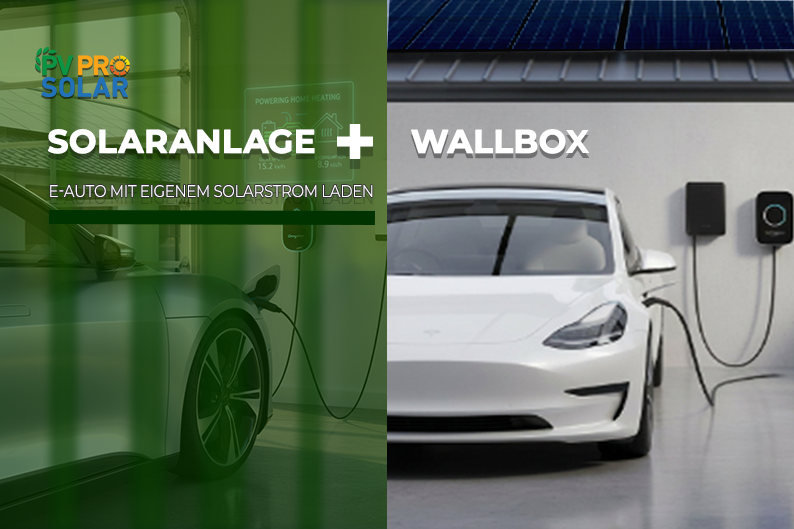
Yes, installing without a battery is reasonable if daytime electricity consumption is high. Storage can be added later, provided the system is modular and the inverter supports integration. A flexible system allows for future upgrades such as wallbox installation or larger storage units.
What expansion options are available for a fully installed solar system?
PV systems are modular and can be expanded with additional modules, larger batteries, or smart control systems. Proper initial planning is essential. Future expansions increase self-sufficiency and allow the system to adapt to changing energy requirements.
Depending on module output, about 5–7 m² per kWp is required. Modern high-efficiency modules may reduce the required space.
Yes, as long as the structure is stable and the roofing is in good condition. In some cases, roof refurbishment is recommended.
Installation usually takes 2–4 days for a single-family home, depending on system size and roof type.
Most rooftop systems do not require permits. Exceptions apply to protected buildings or special regulations.
Yes, most systems are modular and allow additional modules, batteries, or wallboxes to be added. How much roof space is needed for a typical PV system?
Can a solar system be installed on an older roof?
How long does it take to install a complete system?
Is a building permit required?
Can a solar system be expanded later?
PVPro Solar GmbH
In 3 Schritten zur PV-Anfrage
Bedarf klären · Daten senden · Angebot erhalten
Jetzt Anfrage sendenBedarf klären
Schritt 1
Daten senden
Schritt 2
Angebot erhalten
Schritt 3