
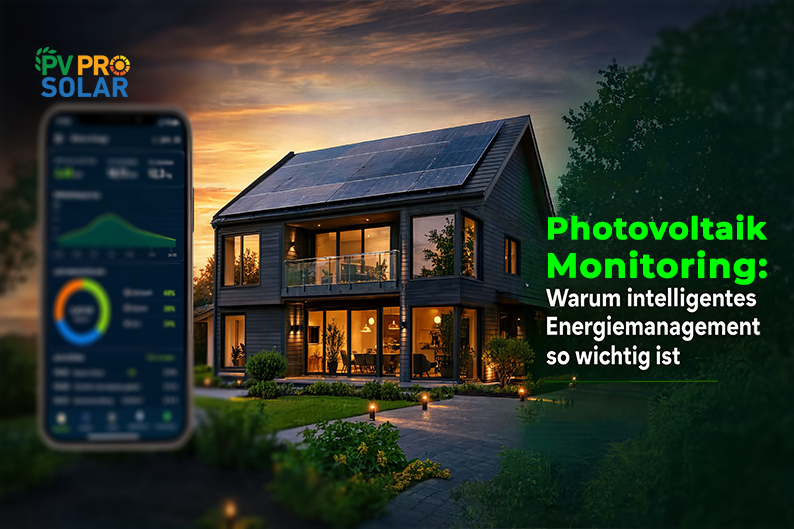
Photovoltaic Monitoring: Why Smart Energy Management Makes All the Difference?
Diese Seite ist auch auf Deutsch verfügbar
Artikel auf Deutsch lesen
Do you have a solar power system on your roof but still have no clear picture of how much electricity you are generating, consuming, storing, or feeding back into the grid at any given moment? If so, you are not alone. Many homeowners invest in photovoltaic systems expecting lower energy bills and greater independence from rising electricity prices, yet they never fully unlock the potential of their investment. The reason is often surprisingly simple: they are not actively monitoring their system.
Photovoltaic monitoring has become one of the most valuable tools available to solar system owners. It provides real time insights into energy production and consumption, helps identify problems before they become costly, and enables intelligent energy management that can dramatically increase self-consumption. In a time when electricity prices remain volatile and homeowners are looking for every opportunity to improve efficiency, monitoring is no longer an optional extra. It has become an essential part of maximizing the value of a solar installation.
PVPro Solar GmbH
Bedarf klären · Daten senden · Angebot erhalten
Jetzt Anfrage sendenBedarf klären
Schritt 1
Daten senden
Schritt 2
Angebot erhalten
Schritt 3
What Is Photovoltaic Monitoring?
Photovoltaic monitoring refers to the continuous digital supervision of a solar energy system. Through a smartphone app, web portal, or dedicated energy management platform, users can see exactly how their system is performing at any moment.
Modern monitoring systems provide far more information than total energy production. They reveal how much electricity your solar panels are generating, how much is being used within your home, how much is stored in a battery system, and how much surplus power is exported to the grid.
The most advanced solutions go even further. They analyze consumption patterns, compare actual output against expected performance, detect irregularities, and provide automated notifications when something requires attention. Many systems can also communicate with household devices and automatically coordinate energy usage based on solar production levels.
The result is complete visibility into your home’s energy ecosystem.
Why Monitoring Matters More Than Most Homeowners Realize
Many solar systems operate for years without their owners ever checking detailed performance data. As long as electricity is being produced, everything appears to be functioning correctly.
Unfortunately, this assumption can be costly.
A solar panel partially covered by dirt or leaves may generate significantly less electricity than expected. An inverter error could reduce system performance for weeks without being noticed. A wiring issue might gradually lower output over time. Without monitoring, these problems often remain hidden until annual production figures reveal that something is wrong.
By then, months of potential savings may already have been lost.
Monitoring allows homeowners to identify and address issues immediately. Rather than discovering a problem long after it has affected system performance, users receive notifications as soon as irregularities occur. This faster response helps protect energy yields and ensures the system continues operating at peak efficiency.
Increasing Self Consumption Through Intelligent Energy Management
For most homeowners, the greatest financial benefit of monitoring comes from increasing self consumption.
Electricity generated by your solar system is most valuable when it is used directly within your home. Every kilowatt hour you consume yourself is electricity you do not need to purchase from the utility company. While exporting surplus electricity can generate some income through feed in tariffs, these payments are generally much lower than the cost of buying electricity from the grid.
Smart energy management systems help maximize self consumption by coordinating energy use with solar production.
Imagine your solar panels are generating large amounts of electricity around midday while nobody is home. Instead of exporting all that excess energy to the grid, the system can automatically activate selected appliances. The washing machine may start a cycle, the battery storage system can begin charging, and the heat pump can operate when solar production is highest.
All of this happens automatically.
As a result, homeowners can often increase self consumption from around thirty percent to sixty or even seventy percent, depending on the size of the system and the household’s energy habits.
Early Fault Detection Protects Your Investment
A photovoltaic system represents a significant financial investment, often designed to operate for twenty years or more. Protecting that investment requires visibility into system performance.
Professional monitoring systems continuously compare actual output with expected production based on weather conditions, historical data, and system specifications. If a particular panel, string, or component begins underperforming, the system identifies the issue immediately.
This level of insight can prevent substantial financial losses.
For example, a malfunctioning panel in a ten kilowatt peak system may reduce annual production enough to cost several hundred euros per year. If the issue remains unnoticed for an extended period, the cumulative losses can become significant.
Monitoring helps ensure that even small performance issues are identified and resolved before they have a major impact on profitability.
Understanding Where Your Energy Is Going
One of the most surprising benefits of photovoltaic monitoring is the insight it provides into household energy consumption.
Many homeowners assume they know where most of their electricity is being used. However, detailed monitoring often reveals a different reality.
Older appliances, standby devices, water heating systems, and inefficient equipment can consume far more electricity than expected. Once this information becomes visible, it becomes much easier to make informed decisions about upgrades and efficiency improvements.
Understanding consumption patterns is often the first step toward reducing overall energy costs. When homeowners can see exactly when and where electricity is being used, they gain the knowledge needed to optimize their household’s energy performance.
AI Driven Battery Management Creates Additional Savings
Battery storage systems have become increasingly popular as homeowners seek greater energy independence. Modern monitoring platforms are enhancing the value of these batteries through artificial intelligence and predictive energy management.
Rather than simply storing excess solar energy whenever it is available, AI powered systems can analyze weather forecasts, electricity prices, and household consumption patterns.
Under dynamic electricity tariffs, the system may decide to charge the battery during periods of lower electricity prices and reserve stored energy for times when electricity is more expensive. It can also predict upcoming solar production and adjust charging strategies accordingly.
This level of optimization would be extremely difficult to achieve manually and can generate meaningful long term savings.
Planning Future Upgrades With Confidence
Many homeowners eventually consider expanding their energy systems. Common upgrades include electric vehicle charging stations, larger battery systems, or heat pumps.
Without accurate energy data, it can be difficult to determine whether these investments make financial sense.
Monitoring provides the information needed to make informed decisions. By reviewing historical production and consumption patterns, homeowners and solar professionals can accurately assess available surplus energy and determine the ideal size for future additions.
This reduces guesswork and helps ensure that every upgrade delivers maximum value.
Choosing the Right Monitoring Solution
Several leading manufacturers offer robust monitoring platforms designed for residential and commercial solar installations.
Fronius Solar.web is known for its intuitive interface and detailed reporting capabilities. SolarEdge Monitoring provides highly detailed module level analysis, making it particularly effective for systems exposed to partial shading. SMA Sunny Portal remains one of the most widely used monitoring platforms and offers reliable performance tracking for a broad range of installations. EcoFlow energy storage systems combine monitoring with advanced battery management and backup power functionality.
Regardless of the platform chosen, the most important factor is the depth of information available. Systems that provide detailed visibility into consumption, storage, grid export, and individual panel performance offer significantly greater opportunities for optimization than those that display only total production figures.
The Connection Between Photovoltaic Monitoring and Smart Homes
Modern energy management is increasingly integrated with broader smart home technology.
Monitoring platforms can communicate with smart home systems such as KNX, Loxone, and other connected devices. This integration enables automated energy management strategies that improve efficiency without requiring constant user involvement.
For example, a homeowner can create an automation rule that charges the battery whenever excess solar energy exceeds a specific threshold. Once the battery reaches a desired charge level, the system can begin heating water or charging an electric vehicle.
By coordinating all major energy consumers within the home, these systems create a highly efficient energy environment that adapts automatically to changing conditions.
Who Benefits Most From Photovoltaic Monitoring?
While virtually every solar system owner can benefit from monitoring, some households gain particularly strong advantages.
Homeowners with battery storage systems can track charging and discharging behavior in detail. Families using heat pumps or electric vehicle chargers can coordinate large energy loads more effectively. Business owners can document self consumption rates and optimize operating costs. New system owners can ensure their installation performs as expected from day one, while owners of older systems can verify that long term performance remains consistent with original specifications.
In short, monitoring provides value wherever energy efficiency and system performance matter.
Conclusion
A photovoltaic system is a long term investment designed to deliver value for decades. Like any investment, its performance improves when it is actively managed.
Photovoltaic monitoring provides the visibility needed to maximize energy production, increase self consumption, identify problems quickly, and make informed decisions about future upgrades. It transforms a solar installation from a passive electricity generator into an intelligent energy system capable of adapting to changing conditions and optimizing itself over time.
For homeowners seeking the greatest possible return on their solar investment, monitoring is not simply a useful feature. It is an essential component of modern energy management.
Professional Advice From PVPro Solar GmbH in Hanover
If you would like to learn which monitoring solution is best suited to your solar installation, or if you are planning a new photovoltaic system with intelligent energy management, the experts at PVPro Solar GmbH in Hanover can help.
As a certified specialist company, PVPro Solar GmbH provides personalized consultation, tailored system design, professional installation, and long term support. Whether you are interested in monitoring, battery storage, heat pump integration, or electric vehicle charging solutions, their team can create a complete energy concept designed specifically for your needs.
Contact PVPro Solar GmbH today to request a free consultation and discover how smart energy management can help you get more from your solar investment.
Basic monitoring functionality is often included with modern inverters and can be used at no additional cost. More advanced energy management systems with automation features typically range from approximately €300 to €1,500 depending on the functionality required. In many cases, the resulting energy savings allow the investment to pay for itself within a relatively short period.
Yes. Most existing photovoltaic systems can be retrofitted with monitoring capabilities. External energy meters and smart measurement devices make it possible to integrate older systems into modern monitoring platforms, even when they were originally installed without advanced communication features.
Results vary depending on household size, energy usage habits, and system configuration. However, many homeowners increase self consumption from roughly twenty five to thirty five percent to between fifty five and seventy percent when combining monitoring with intelligent energy management and battery storage.
Most reputable providers store data on secure servers within the European Union and comply with GDPR requirements. Homeowners should review privacy policies carefully and choose systems that provide clear control over data storage and cloud connectivity.
In most cases, users receive immediate notifications through a mobile app or email. For serious safety related issues, the inverter may automatically shut down and disconnect the system from the grid. Any significant fault should be inspected by a qualified solar professional.
Yes. Many modern energy management platforms support solar optimized vehicle charging. This allows electric vehicles to charge primarily when surplus solar energy is available, reducing dependence on grid electricity and maximizing the use of self generated power.How Much Does a Photovoltaic Monitoring System Cost?
Can Existing Solar Systems Be Upgraded With Monitoring?
How Much Can Self Consumption Increase?
Is Monitoring Safe From a Privacy Perspective?
What Happens If the Monitoring System Detects a Fault?
Can Monitoring Systems Work With Electric Vehicle Chargers?
PVPro Solar GmbH
In 3 Schritten zur PV-Anfrage
Bedarf klären · Daten senden · Angebot erhalten
Jetzt Anfrage sendenBedarf klären
Schritt 1
Daten senden
Schritt 2
Angebot erhalten
Schritt 3