
Optimally Combining Smart Home Technology and Photovoltaics

A photovoltaic (PV) system on your roof generates clean electricity, but the timing of electricity generation and consumption often does not align. This is exactly where the combination of smart home technology and photovoltaics comes into play. By intelligently managing your solar power instead of feeding unused energy into the grid, you can significantly increase the value and efficiency of your system.
In this guide, you’ll learn how a connected home and your solar installation work together, which components are involved, and what to consider when planning your system.
PVPro Solar GmbH
In 3 Schritten zur PV-Anfrage
Bedarf klären · Daten senden · Angebot erhalten
Jetzt Anfrage sendenBedarf klären
Schritt 1
Daten senden
Schritt 2
Angebot erhalten
Schritt 3
What Does Integrating Smart Home Technology with Photovoltaics Mean?
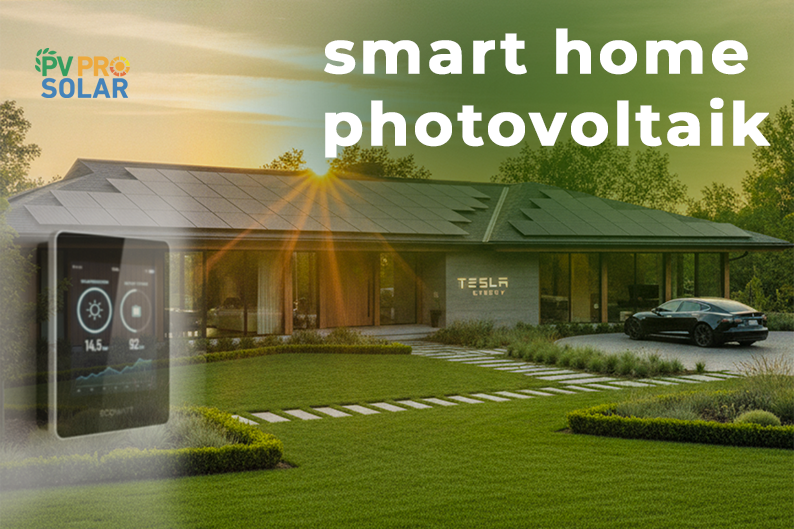
A smart home is a residence in which devices, appliances, and energy sources are interconnected and can be controlled automatically. When this concept is combined with a photovoltaic system, it creates an energy ecosystem that uses self-generated solar power when it is most readily available, during periods of sunshine.
Instead of exporting surplus solar energy to the grid for relatively low feed-in compensation, intelligent energy management ensures that as much of the generated electricity as possible is consumed within the household. Appliances such as washing machines, heat pumps, EV chargers, and battery storage systems are activated when solar production is highest. The result is increased self-consumption and noticeably lower electricity costs.
At PVPro Solar, this principle is at the core of every project. A solar installation is not planned as a standalone system but as a future-proof energy solution that can seamlessly integrate battery storage, EV charging, and heat pump technology whenever needed.
Why Self-Consumption Is the Key to Profitability
The calculation is simple: every kilowatt-hour of solar electricity you consume yourself replaces expensive grid electricity. While grid power comes at a significantly higher cost depending on your tariff, exporting excess energy to the public grid typically yields only modest compensation.
This creates a clear objective for every solar-powered household: maximize direct consumption of the electricity generated on-site. Without intelligent control, the self-consumption rate of a typical PV system is often relatively low because many electrical loads are not operating during the daytime when solar production is at its peak.
Three key strategies help increase self-consumption:
- Battery storage: Stores excess solar energy for use during the evening and night.
- Load shifting: Moves the operation of appliances into periods of high solar production.
- Sector coupling: Integrates heating (heat pumps) and mobility (EV charging) into the solar energy ecosystem.
The full savings potential is realized when these strategies are combined with automated energy management.
The Building Blocks of a Connected Solar Home
An effective solar-powered smart home consists of several components working together seamlessly.
| Component | Function |
| Photovoltaic system | Generates solar electricity |
| Inverter | Converts DC power into usable AC power |
| Battery storage | Stores surplus energy for use outside daylight hours |
| Energy management system | Intelligently controls and distributes energy flows |
| EV charger (Wallbox) | Charges electric vehicles primarily using solar power |
| Heat pump | Uses solar electricity for heating and hot water |
| Monitoring system | Provides transparent insights into generation and consumption |
PVPro Solar uses premium components from leading manufacturers such as AIKO, JA Solar, Longi, Solplanet, Fronius, BYD, EcoFlow, and K2 Systems. What matters most is not only the quality of the individual components but also their seamless integration.
Photovoltaic Automation: How Intelligent Control Works
Photovoltaic automation refers to the rule-based or AI-driven control of energy-consuming devices based on current solar production. Instead of manually deciding when to run appliances or charge your vehicle, the system automatically optimizes energy usage.
Typical automation scenarios include:
- The EV charger starts charging only when sufficient solar surplus is available (surplus charging).
- The battery storage system prioritizes charging during midday when production is highest.
- The heat pump heats water during periods of strong solar generation.
- Large household appliances are scheduled to operate during peak sunlight hours.
A particularly advanced example is the AI-powered storage solution offered by PVPro Solar. It automatically optimizes energy consumption by continuously analyzing electricity prices and user behavior, storing or using energy at the most economical times. This allows homeowners to take full advantage of dynamic electricity tariffs—something that is difficult to achieve through manual control alone.
Energy Management: The Brain of Your Solar Smart Home
The energy management system (EMS) serves as the central control hub that coordinates all components. It continuously monitors how much electricity the PV system is generating, how much the household is consuming, and the current charge level of the battery storage system.
Based on this data, it determines where energy should be directed.
The typical priority sequence is:
- Direct household consumption
- Charging the battery storage system
- Supplying the heat pump and EV charger
- Exporting surplus energy to the grid
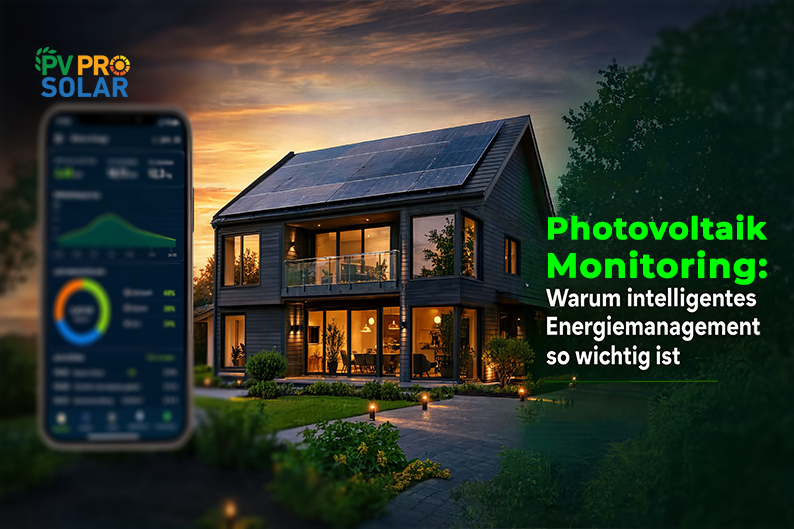
A high-quality energy management system not only automates these processes but also makes them fully transparent. Through a mobile app or web portal, you can monitor your solar production, consumption, battery status, and grid exports at any time.
This level of monitoring is more than just a convenience feature, it helps you better understand your energy usage and identify additional opportunities for savings.
PVPro Solar includes system monitoring as standard and offers optional backup power solutions for increased energy independence, an increasingly important feature as interest in energy security continues to grow.
Real-World Example: A Day in a Connected Home
How does this work in practice? A typical sunny day in a solar smart home might look like this:
Morning
The PV system begins generating electricity. The energy management system first covers the home’s base load, such as refrigeration and standby devices.
Midday
Solar production reaches its peak. The battery storage system charges, the heat pump prepares hot water, and—if the electric vehicle is at home—the EV charger begins surplus charging.
Afternoon
Generation gradually declines. The household continues using solar power directly, while any remaining surplus is stored in the battery.
Evening
As solar production stops and electricity demand increases due to cooking, lighting, and entertainment, the battery storage system supplies the home. This minimizes reliance on expensive grid electricity.
All of these processes occur automatically without requiring any manual intervention.
What to Consider During Planning
A connected solar energy system delivers maximum value only when all components are properly coordinated from the outset.
Key planning considerations include:
Compatibility
The battery storage system, inverter, and control platform should be able to communicate seamlessly with one another.
Scalability
Even if you do not currently have an EV charger or heat pump, your system should allow for future expansion.
Proper Sizing
The size of the PV system and battery storage capacity should match your energy consumption profile.
Professional Installation
A professional installation compliant with VDE standards and local utility requirements is essential for safe and reliable operation.
Registration and Compliance
Grid connection approval and registration in the Market Master Data Register are mandatory requirements.
As a certified master craftsman company, PVPro Solar provides all these services from a single source—from energy analysis and system design to installation and ongoing support. Future expandability is a key advantage, allowing battery storage systems, EV chargers, and heat pumps to be added at any time.
Conclusion
Combining smart home technology with photovoltaics transforms a standard solar installation into an intelligent energy system. Through automated control, advanced energy management, and the integration of battery storage, EV charging, and heat pumps, self-consumption can be significantly increased, resulting in long-term reductions in electricity costs.
Homeowners who invest in a scalable and well-integrated system from the beginning benefit from greater energy independence, transparency, and efficiency for years to come.
Successful implementation depends on expert planning and seamless interaction between all system components. A connected home is not achieved by chance, it is the result of careful design and professional execution.
Would you like to find out what a connected solar smart home could look like for your property?
The specialists at PVPro Solar in Hanover offer free consultations and can design a customized energy solution tailored to your needs, including optional battery storage, EV charging, and heat pump integration.
Request your free quote today or call us directly at +49 511 3360603.
The combination increases the self-consumption of your solar energy by automatically operating devices such as EV chargers, heat pumps, and household appliances when solar production is highest. This reduces your reliance on expensive grid electricity and lowers your energy costs.
Not necessarily. However, battery storage significantly increases self-consumption by making surplus solar energy available during the evening and nighttime hours. Even without a battery, intelligent load shifting can still provide substantial benefits.
An energy management system continuously monitors solar production, household consumption, and battery status, then automatically distributes electricity according to predefined priorities—typically household use first, followed by battery charging, heat pump and EV charging, and finally grid export.
In many cases, yes. Battery storage systems, EV chargers, heat pumps, and intelligent control solutions can often be added later. The key factor is compatibility with existing components, which should be assessed during a professional consultation.
A standard grid-connected inverter automatically shuts down during a power outage for safety reasons. To maintain electricity supply during a blackout, you need a battery storage system combined with a backup-capable inverter or dedicated backup power solution. What are the benefits of combining smart home technology with photovoltaics?
Do I need a battery storage system for a solar smart home?
What does an energy management system do?
Can an existing solar system be upgraded with smart features?
Will a connected home continue operating during a power outage?
PVPro Solar GmbH
In 3 Schritten zur PV-Anfrage
Bedarf klären · Daten senden · Angebot erhalten
Jetzt Anfrage sendenBedarf klären
Schritt 1
Daten senden
Schritt 2
Angebot erhalten
Schritt 3